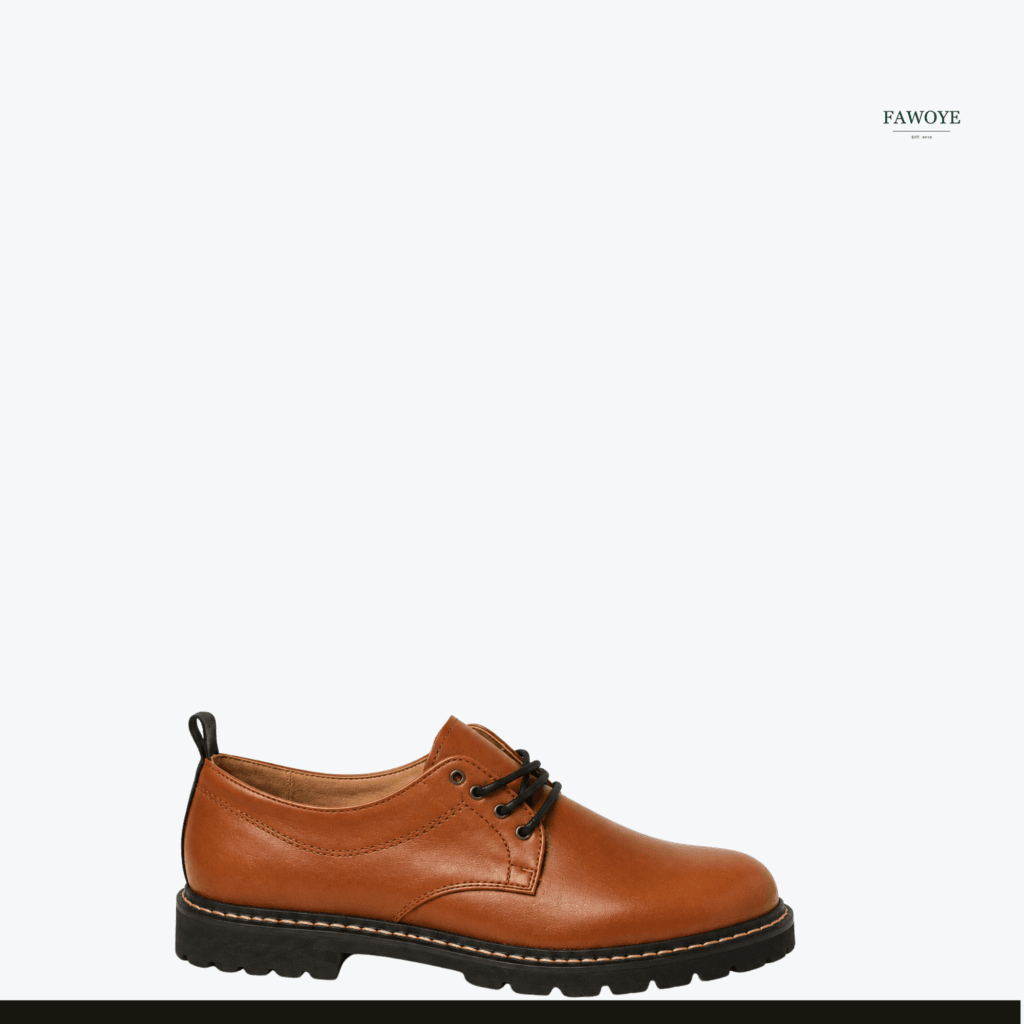
Derby shoes are lace-up shoes made with an open-lacing construction. The pieces of material that hold the eyelets are attached on top of the vamp, so they can open outward when the laces are loosened.
That one construction detail separates a Derby from an Oxford. It also gives the Derby a relaxed, adaptable character: polished enough for many Nigerian offices and events, but easy to style with chinos and smart casual outfits.
If you have ever looked at two pairs of lace-up shoes and wondered why one feels more formal or easier across the instep, the answer may be in the lacing.
How to identify a Derby shoe
Look at the area around the laces.
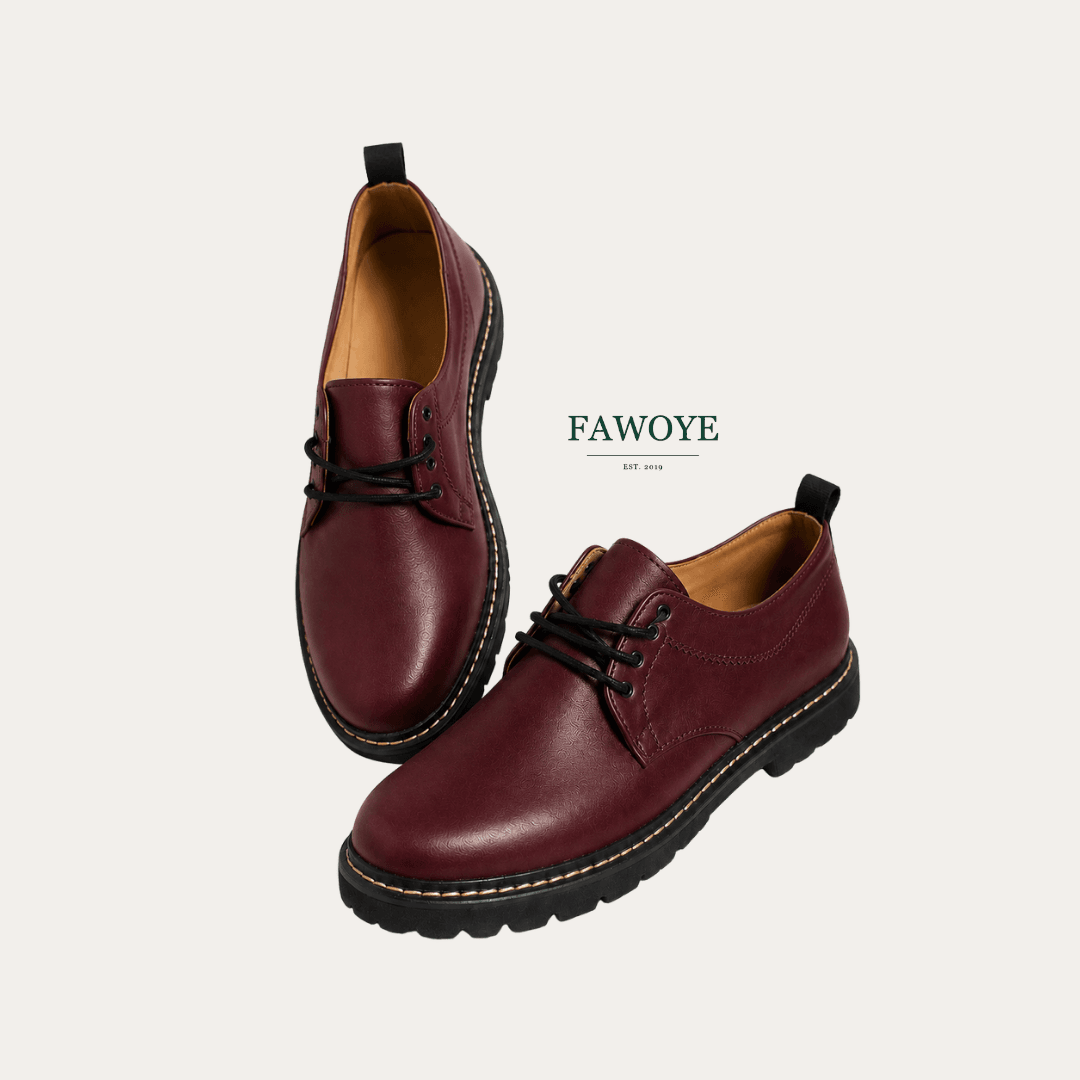
On a Derby, the eyelet sections sit visibly on top of the front part of the upper. When you loosen the laces, those sections can lift and spread apart. This is called open lacing.
On an Oxford, the eyelet sections are stitched underneath the vamp, creating a neater closed-lacing line. They do not open as freely.
A shoe can have a plain toe, cap toe, brogue detailing or another decorative finish and still be a Derby. “Derby” describes the lacing construction, not one specific toe design.
That distinction is useful when shopping online. Do not identify the shoe by decoration alone; zoom in on the lacing area.
Derby shoes versus Oxford shoes
Both are lace-up dress shoes, but they do different jobs.
Derby shoes
- Open lacing
- More room for adjustment over the instep
- Usually reads as slightly less formal
- Works across business, smart casual and selected occasion outfits
- Often an approachable first formal shoe
Oxford shoes
- Closed lacing
- Cleaner, more streamlined appearance
- Usually reads as more formal
- Strong choice for suits, formal ceremonies and conservative dress codes
- Can feel less adjustable over a high instep
Neither style is automatically better. An Oxford may be the sharper option for a very formal suit, while a Derby can be the more flexible choice for someone moving between office trousers, chinos and weekend dressing.
For a three-way comparison, read Oxford vs Derby vs Loafer. You can also explore the construction of the Oxford in What Are Oxford Shoes?
Are Derby shoes formal?
Derby shoes sit across the formal-to-casual spectrum. The final level of formality depends on their colour, material, toe shape, sole and decoration.
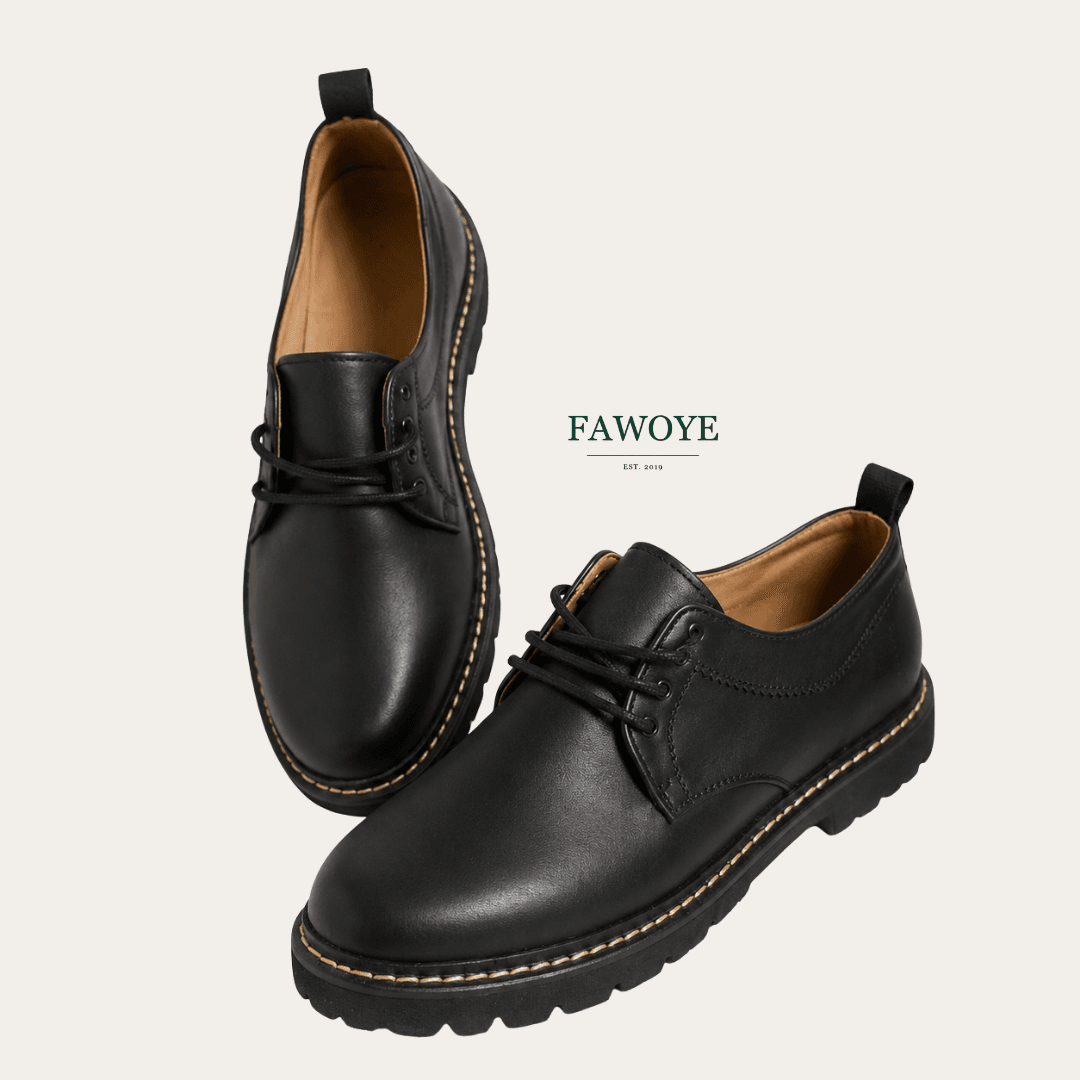
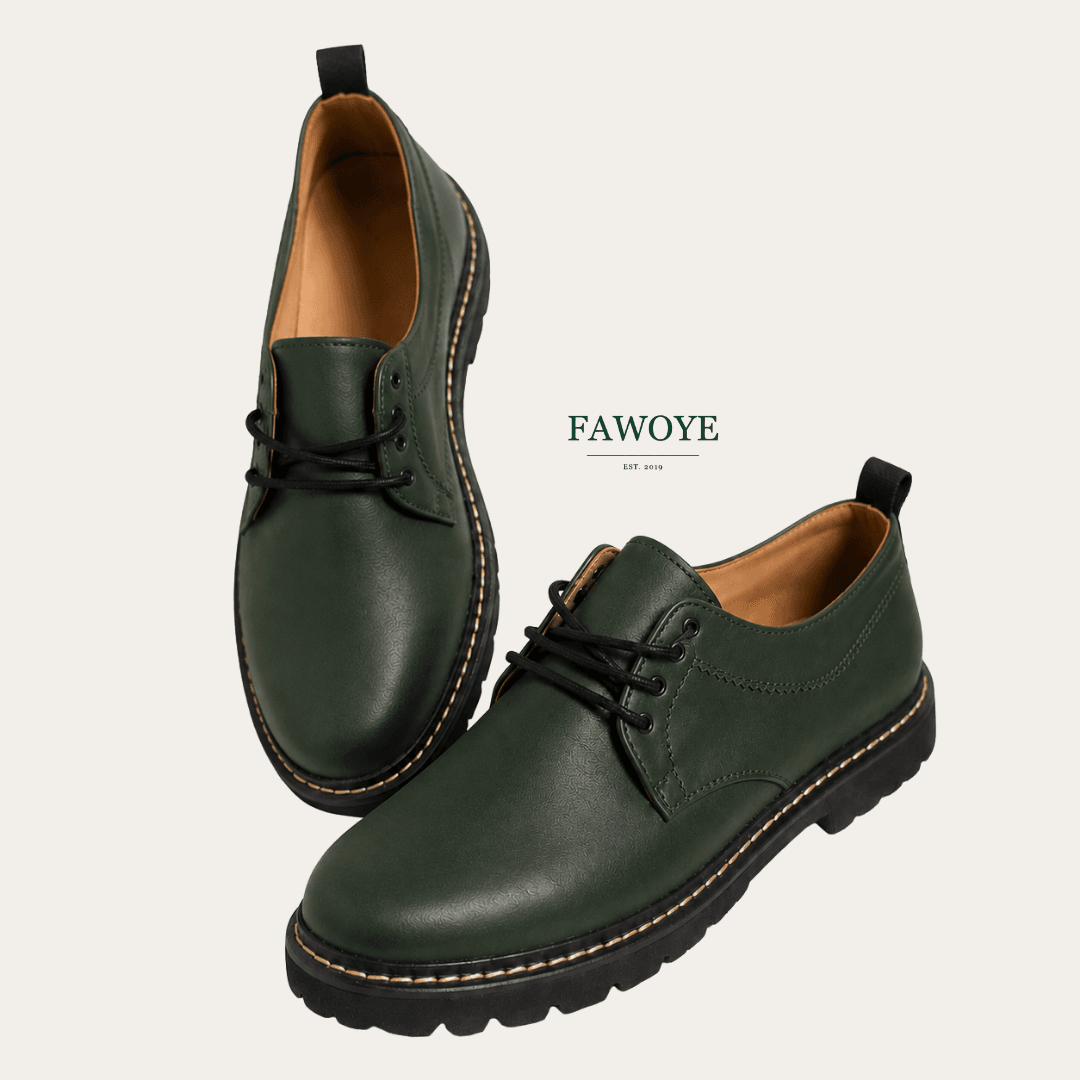
A sleek black leather Derby with minimal detailing can work in many formal business settings. A dark brown pair is versatile for office outfits and occasions. A suede Derby, chunky sole or heavily textured finish will generally feel more relaxed.
This is important in Nigeria because “formal” covers different wardrobes. A bank or law office may lean towards a dark suit and understated shoes. A creative office may allow a brown Derby with chinos. A traditional event may call for a different balance entirely.
Read the room, then choose the finish.
What to wear with Derby shoes in Nigeria
With suits
A clean black or dark brown Derby can work with a business suit when the shoe has a refined shape and simple upper. Black is the safer choice for a conservative dress code. Dark brown can soften navy, medium-grey and earth-toned tailoring.
For the strictest formal event, an Oxford may still look sharper. But a polished Derby is suitable for many Nigerian offices, interviews, church services and professional occasions.
With office trousers
This is where Derby shoes are especially useful. Pair them with tailored trousers, a shirt and belt for a dependable weekday outfit.
Keep the colour relationship intentional. Black shoes are straightforward with charcoal, black and many navy trousers. Brown shoes work well with navy, beige, cream, olive and several shades of grey.
See Best Office Shoes for Nigerian Men for a broader workwear rotation.
With chinos or smart denim
Brown, tan or suede Derby shoes can work with chinos and a polo, Oxford shirt or lightweight knit. If you wear denim, choose a dark, clean pair without heavy distressing, and keep the trouser hem neat.
A bulky or highly decorated Derby will feel more casual than a sleek plain-toe version. Use that difference deliberately.
With senator wear or kaftan
A simple Derby can work with a modern, tailored senator outfit, especially for a business-casual or church setting. Choose a low-profile shape and avoid overcrowding an already detailed outfit.
For flowing agbada or occasions where the trouser hem is narrow and the look benefits from ease, a loafer, monk strap or refined sandal may create a cleaner line. Read What Shoes Match Senator Wear? and What Shoes to Wear with Kaftan before deciding.
Derby shoes versus loafers and monk straps
A loafer has no laces. It slips on and creates an easy, clean line with chinos, suits and native wear. A Derby gives more adjustment and usually holds the foot through its laces.
A monk strap uses one or more buckled straps instead of laces. It can feel more distinctive and fashion-forward, particularly with native wear or occasion outfits.
Choose a Derby if you want a classic lace-up shoe with a little more visual ease than an Oxford. Choose a loafer for slip-on convenience, or a monk strap when the buckle detail is part of the look.
The guide Loafers vs Monk Straps for Native Wear explains those two alternatives.
Materials: leather, suede and other options
Derby construction is not limited to one material.
Smooth leather is a practical choice for formal and business dressing because it can take a polished finish. Suede creates a softer, more relaxed appearance and needs care suited to its nap. Mixed-material designs may introduce contrast, but they usually reduce formality.
At FAWOYE, materials vary by product and selected specification. Do not assume every design is leather, and do not use leather cream on suede. Confirm the material of the exact pair before applying any care product.
During Nigeria’s rainy season, avoid prolonged soaking. If shoes become damp, let them dry naturally away from direct heat and use the care method for their actual material. During harmattan, brush off dust gently and condition smooth leather only when appropriate.
How should Derby shoes fit?
The heel should feel secure, the instep should be held without painful pressure, and your toes should lie naturally without touching the front. The ball of your foot should line up with the widest part of the shoe.
Open lacing gives adjustment over the instep, but it cannot fix a shoe that is too short or built on the wrong last. Leather can soften across the width; it will not become longer.
Use the full How Should Derby Shoes Fit? checklist before choosing an EU size.
When a Derby is the right choice
A Derby may be right for you if:
- you want one lace-up style for office and smart-casual wear;
- you prefer more instep adjustment than a closed-lacing Oxford provides;
- you wear tailored trousers more often than very formal evening suits;
- you want a shoe that can move between professional and social settings; or
- you like classic construction without an overly severe appearance.
It may not be the first choice if your wardrobe is dominated by strict black-tie dressing, very flowing traditional wear or outfits that specifically need the convenience of a slip-on.
What to check before buying
Construction
Confirm that it is genuinely an open-lacing Derby. Product names are not always enough.
Fit
Check the heel, instep, ball position, toe room and flex point. Try both feet and use your normal sock thickness.
Material
Ask whether the upper is smooth leather, suede, woven material or a combination. This affects appearance and care.
Sole
A slim sole looks dressier. A thicker sole may feel more casual and can change the shoe’s weight and flexibility.
Colour
Black is the safest for conservative business dressing. Dark brown offers broad versatility. Tan stands out more and generally reads as less formal.
Your real wardrobe
Buy for the clothes and occasions you already have. A versatile shoe is one you will genuinely wear, not simply one that looks good in isolation.
FAWOYE styles to compare
These verified product pages help you compare different closure systems and levels of detailing:
- Wing Tail Brogue — a detailed lace-up option for business and occasion styling
- Penny Loafers — a laceless alternative with an easy, classic profile
- Two-Toned Monkstrap — a buckle-fastened alternative for a more distinctive look
You can also browse the Made-to-Order collection to discuss available sizes, materials and finishes. Availability and specifications should always be confirmed on the current product page.
The short answer
A Derby is an open-lacing shoe. It is generally less formal and more adjustable over the instep than an Oxford, while remaining smarter and more structured than many casual shoes.
For Nigerian wardrobes, its strength is versatility. Choose a refined dark pair for office wear, a warmer brown for mixed business and social use, or a softer material for smart-casual outfits. Then make sure the shape fits your foot—not only the dress code.
Frequently Asked Questions
Why are they called Derby shoes?
“Derby” is the established name for this open-lacing construction. The most useful detail for buyers is not the history of the name but the visible eyelet sections stitched on top of the vamp.
What is the main difference between Derby and Oxford shoes?
A Derby has open lacing, while an Oxford has closed lacing. The Derby normally allows more adjustment over the instep and appears slightly less formal.
Can Derby shoes be worn with a suit?
Yes. A sleek black or dark brown Derby can work with many business suits and professional outfits. For the most formal dress codes, a plain Oxford may look sharper.
Can I wear Derby shoes with native wear?
A simple, refined Derby can work with a tailored senator outfit or kaftan. Loafers, monk straps and sandals may suit flowing agbada or more traditional styling better.
Are Derby shoes comfortable for wide feet?
Open lacing can help with instep adjustment, but comfort still depends on the last, width and correct size. A Derby is not automatically wide.
Are brogues and Derby shoes the same thing?
No. Broguing is decorative perforation. A brogued shoe may use Derby or Oxford construction, so check the lacing system.
Can Derby shoes be made in suede?
Yes. Derby describes the construction, not the material. A suede Derby usually looks more relaxed than a smooth leather version and requires suede-specific care.