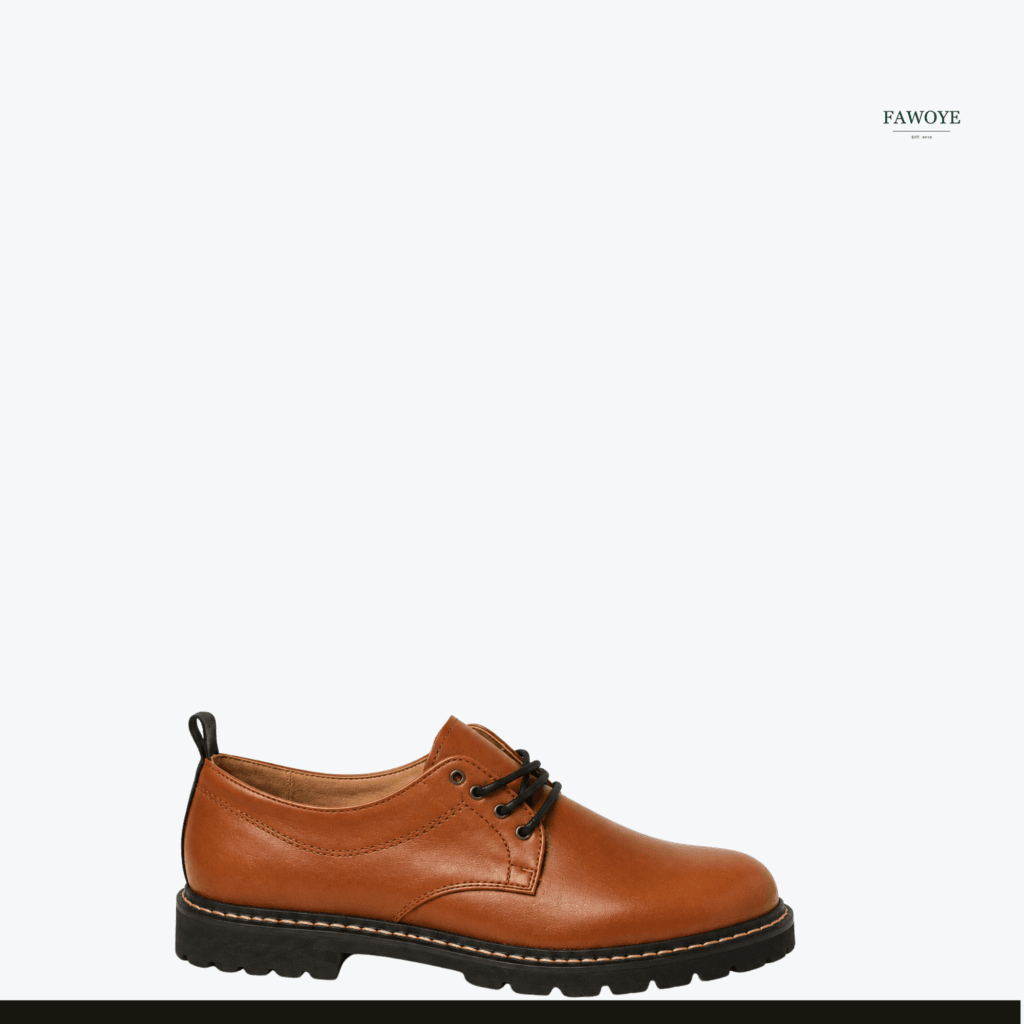
A Derby shoe should feel secure around the heel and midfoot, comfortable across the widest part of your foot, and roomy enough for your toes to lie naturally. It should not squeeze, pinch or depend on a painful “break-in” period before it becomes wearable.
That sounds simple, but formal shoes can be difficult to judge in a quick fitting. The leather may feel firmer than a trainer, the laces may sit differently from an Oxford, and Nigerian heat can make feet feel slightly fuller later in the day. The aim is not to find the tightest pair you can tolerate. It is to find a pair that holds your foot without fighting it.
Why Derby shoes fit differently
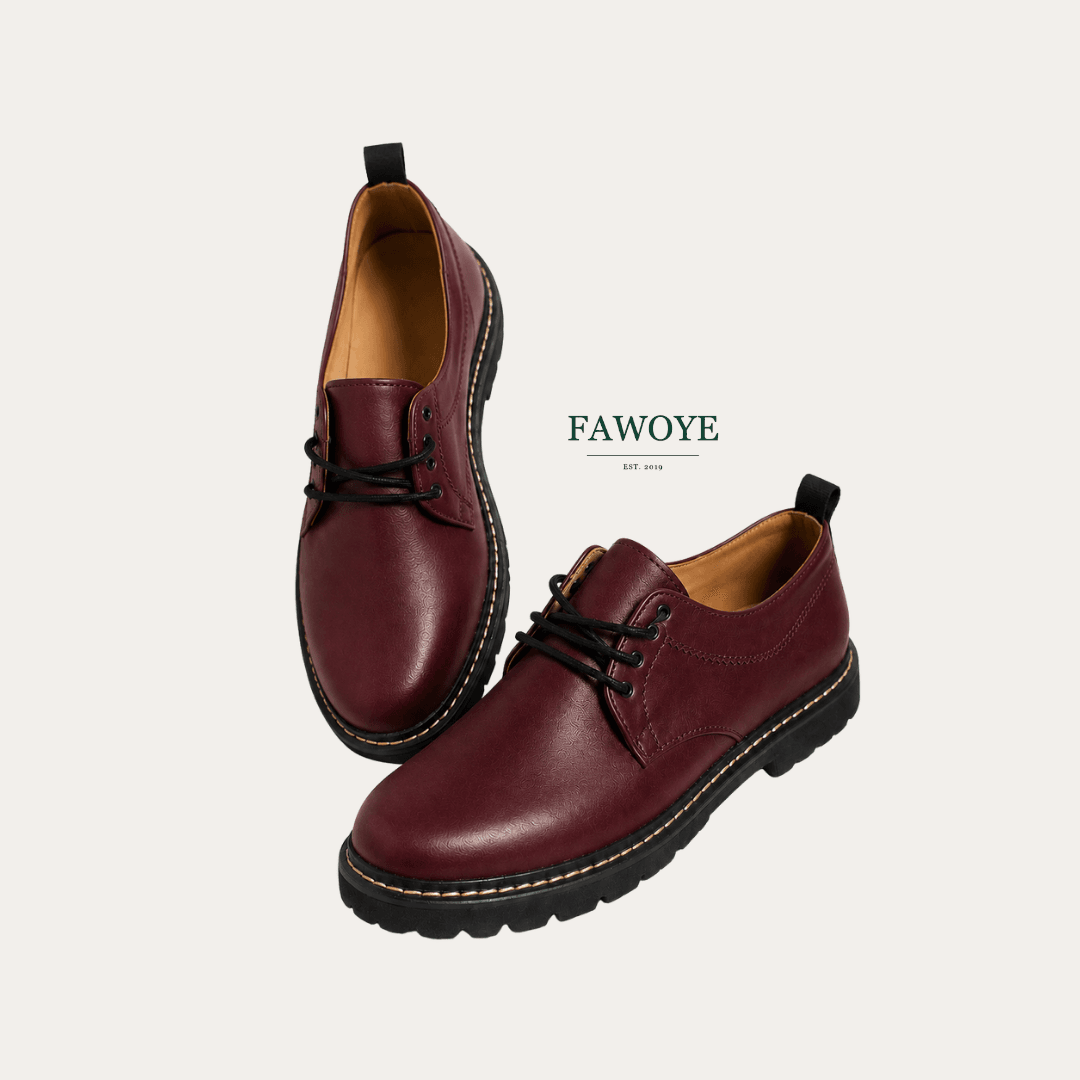
The defining feature of a Derby is its open-lacing construction. The sections that hold the eyelets sit on top of the vamp and can open more freely when the laces are loosened. This gives the shoe more adjustment over the instep than a closed-lacing Oxford.
That flexibility is helpful if you have a high instep or need a little more room across the top of the foot. It does not mean every Derby will suit every foot. The shape of the last—the form around which the shoe is made—still determines its width, toe shape, volume and heel hold.
If you want the construction explained first, read What Are Derby Shoes?
The five places to check
1. The heel should feel held, not crushed
Your heel should sit securely in the back of the shoe when you walk. A tiny amount of movement in a new structured shoe can settle as the sole flexes, but your heel should not lift noticeably with every step.
If the heel slips while the laces are properly tied, the shoe may be too large, too wide at the back or simply the wrong shape for your foot. Tightening the laces until the instep hurts is not a good solution.
At the other extreme, the heel counter should not dig sharply into your skin. Wear the socks you normally use with formal shoes and walk for several minutes before deciding.
2. The instep should be comfortably secure
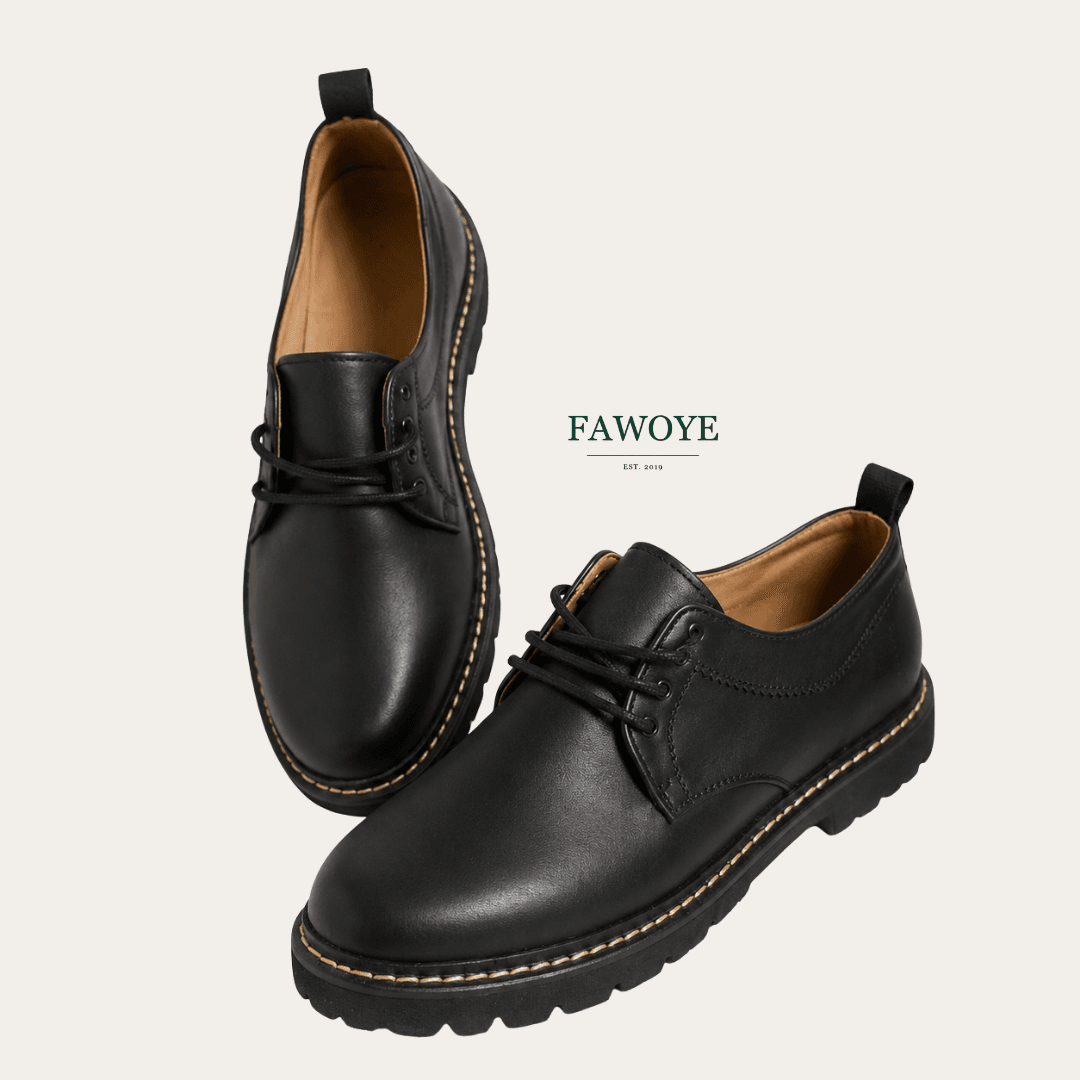
Tie the laces with normal tension. The two eyelet sections do not need to touch. They should sit neatly and hold your foot without pressing painfully into the top of it.
A high instep may leave a wider gap between the lacing sections; a lower instep may bring them closer together. What matters is the feeling underneath. Your foot should not slide forward, and you should not feel numbness, throbbing or a hard ridge of pressure.
If the sides overlap or meet while the shoe still feels loose, there may be too much volume. If they spread very widely and the top of your foot is under pressure, you may need more instep room.
3. The widest part of your foot should match the shoe
The ball of your foot should sit at the widest part of the shoe. This allows the shoe to flex where your foot naturally bends.
If the joint of your big toe sits too far forward or behind that point, the size or last may be wrong even when the overall length seems acceptable. You should not see the upper bulging heavily over the sole edge, and your little toe should not feel trapped.
Leather may soften and give slightly across a pressure point, but it will not reliably turn a narrow shoe into a wide one. Suede can feel softer from the beginning, yet the underlying shape still matters.
4. Your toes need natural room
Your toes should lie flat and move slightly. They should not touch the front when you stand, walk or go down a step.
Do not judge toe room by a fixed finger-width rule alone. Derby shoes have different toe shapes, and some include decorative space beyond the toes. Check where your longest toe actually ends and whether the shoe bends with your foot.
A shoe that is too short will not stretch longer. If your toes are compressed, move to a more suitable size or toe shape instead of waiting for the discomfort to disappear.
5. The shoe should flex without pinching
Walk on a clean surface and watch where the upper creases. It should flex around the ball of the foot, not collapse painfully across the toes.
A new sole may feel more structured than a casual shoe, but your steps should still feel stable. If the shoe bends in the wrong place, slides at the heel or forces your toes to grip, reconsider the size or shape.
A simple Derby shoe try-on test
Try both shoes, because one foot is often slightly larger than the other.
- Wear the sock thickness you plan to use.
- Try the shoes later in the day when possible, especially after you have been moving around.
- Stand fully before judging the length and width.
- Lace them with comfortable, normal tension.
- Walk for at least a few minutes on a clean indoor surface.
- Check the heel, instep, widest point, toes and flex point separately.
- Test a small step or incline if available; your toes should not hit the front.
- Choose for the larger foot, then adjust the smaller side with an insole or heel grip only if appropriate.
Nigeria’s heat can make feet feel fuller as the day progresses, so a pair that is already extremely tight during a cool morning fitting is unlikely to become more comfortable after a long Lagos or Abuja workday.
For a broader sizing process, use the FAWOYE size guide.
Should Derby shoes feel tight at first?
They can feel firm, especially if the upper and sole are structured, but “firm” should not mean painful. A good new pair may become more flexible through wear. It should not require blisters, numb toes or sharp pressure as proof that it is breaking in.
The most reliable rule is this: expect the material to soften and flex, but do not expect the shoe to become longer or completely change its shape.
Our guide on the shoe break-in myth explains why pain is not a sizing strategy.
What if you are between EU sizes?
Do not automatically size down because a Derby has adjustable laces. Compare the length, ball position, instep volume and heel hold in both sizes.
If the smaller size compresses your toes, it is too short. If the larger size has good toe and ball placement but slight extra volume, a suitable insole may help. If neither works, a different last or made-to-order approach is usually better than forcing the wrong pair.
For a made-to-order shoe, provide accurate measurements and mention useful details such as a high instep, broad forefoot, narrow heel or meaningful difference between your feet. Measurements help, but the maker also needs to understand how the foot is shaped.
Fit mistakes to avoid
- Buying a painfully tight pair because “leather expands”
- Choosing by your usual size without checking the specific last
- Testing only one shoe
- Trying formal shoes with very thin socks when you will wear thicker socks
- Using loose laces to hide pressure across the instep
- Using painfully tight laces to stop heel slip
- Assuming the longest-looking toe shape provides the best fit
- Keeping a shoe that already makes your toes touch the front
How fit affects styling and daily wear
A well-fitting Derby is useful because it can move between formal and smart-casual outfits. It can work with business trousers, chinos and selected native wear, depending on its colour, material and detailing.
But versatility only matters if you can wear the pair comfortably. If your day involves commuting, office corridors, meetings and standing at events, secure heel hold and correct ball placement are more valuable than buying purely for appearance.
Compare the Derby with other useful styles in Oxford vs Derby vs Loafer, see outfit ideas in How to Style Derby Shoes, or compare two practical work options in Chelsea Boots vs Derby Shoes.
FAWOYE styles to compare
The right option depends on the level of formality and closure you prefer. These verified FAWOYE pages provide useful alternatives to compare while choosing:
- Wing Tail Brogue — a detailed lace-up style to consider for business and occasion dressing
- Penny Loafers — a slip-on alternative if you prefer a laceless fit
Browse the Made-to-Order collection when you want to discuss size, material and finishing choices with the FAWOYE team.
Final fit checklist
A Derby fits properly when:
- your heel feels secure during a normal walk;
- the laces hold the instep without painful pressure;
- the ball of your foot aligns with the widest part of the shoe;
- your toes can lie flat and do not touch the front;
- the shoe flexes where your foot bends; and
- you can imagine wearing it through a real Nigerian workday or event, not only for two minutes beside a mirror.
If any one area feels clearly wrong, pause before buying. A beautiful shoe in the wrong shape will remain the wrong shoe.
Frequently Asked Questions
Should my heel move in Derby shoes?
A very small amount of movement can occur in a new structured shoe, but the heel should not lift noticeably with every step. Persistent slipping usually points to excess length, width or heel volume.
Should the eyelet sections touch when Derby shoes are tied?
Not necessarily. Because Derby shoes use open lacing, the gap varies with the shoe and your instep. Comfort and secure hold matter more than making both sides touch.
How much room should be in front of my toes?
There should be enough room for your toes to lie flat without touching the front when standing or walking. The visible space varies with the toe shape, so also check ball placement and the flex point.
Will leather Derby shoes stretch?
Leather can soften and give slightly across the width, but it will not meaningfully increase the shoe’s length. Do not buy a pair that compresses your toes.
Are Derby shoes good for wide feet?
Their open lacing can provide more instep adjustment than an Oxford, but width depends on the last. Look for a shape that matches your forefoot rather than relying on the laces alone.
Can I wear Derby shoes all day?
Yes, if the size, shape, support and materials suit your feet and routine. For long days, also consider cushioning, sole flexibility and the surfaces you usually walk on. See Comfortable Shoes for Standing All Day.