Oxford shoes are formal lace-up shoes identified by closed lacing. That means the sections of leather that carry the eyelets—the quarters—are stitched underneath the front section of the upper, called the vamp. When the laces are tied, the opening looks neat and close to the foot.
That small construction detail gives the Oxford its clean, streamlined appearance. It is the main reason Oxfords are often chosen for interviews, Nigerian corporate offices, church, formal weddings and occasions where a polished suit is required.
“Oxfords” does not simply mean every smart shoe with laces. A Derby is also a lace-up dress shoe, but its eyelet sections sit on top of the vamp and can open more widely. Once you know where to look, the difference is easy to see.
The Oxford shoe in one sentence
An Oxford is a low-heeled lace-up shoe with a closed-lacing system, usually designed with a neat formal profile.
The shoe may be plain or decorated. It may have a cap toe, brogue perforations, a wholecut upper or other design details. Those features can change the formality, but the closed lacing is what makes the shoe an Oxford.
How to identify closed lacing
Look at the eyelets and the leather directly beneath them.
On an Oxford:
- The eyelet sections are sewn under the vamp
- The bottom of the lacing area forms a neat, closed “V”
- The quarters cannot flare open as freely
- The upper usually looks slim and uninterrupted
On a Derby:
- The eyelet sections are sewn on top of the vamp
- The lacing opens more widely
- The quarters can move farther apart
- The fit is often more forgiving for a high instep or wider foot
This is a construction distinction, not a quality ranking. An Oxford is not automatically better than a Derby. The best choice depends on your foot, outfit and occasion. For a three-way comparison, see Oxford vs Derby vs Loafer. You can also read What Are Derby Shoes? for a closer look at open lacing.
Where did Oxford shoes get their name?
The modern Oxford developed from earlier low shoes worn in Britain during the nineteenth century. Accounts often connect its name with Oxford University and a lower boot style known as the Oxonian.
For a buyer today, the historical debate is less important than the construction. Retailers sometimes use “Oxford” loosely for almost any formal lace-up. When shopping, inspect the lacing rather than relying only on the product name.
Main types of Oxford shoes
Plain-toe Oxford
A plain-toe Oxford has no cap seam across the front. Its uncluttered appearance makes it formal and minimal. In black smooth leather, it can work with a dark suit and serious eveningwear.
Cap-toe Oxford
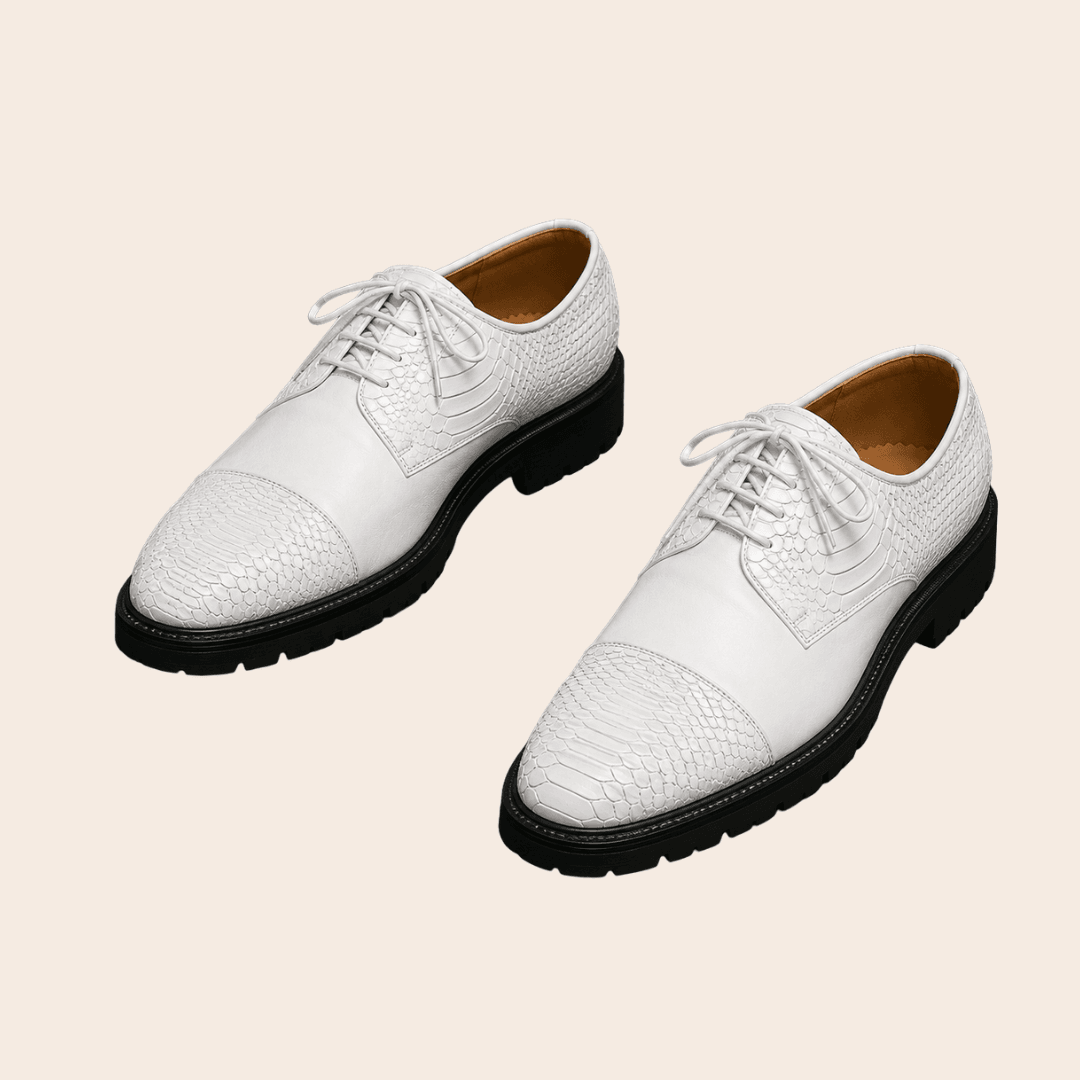
A cap-toe Oxford has a horizontal seam across the toe area. It is one of the most versatile formal shoes a Nigerian professional can own. Black is a dependable choice for conservative offices and interviews; dark brown works well with navy and grey tailoring.
Wholecut Oxford
A wholecut is made with a single main piece of upper material, apart from the back seam. The surface looks exceptionally clean, but producing a neat wholecut demands skilled pattern cutting and lasting.
Brogue Oxford
“Brogue” refers to decorative perforations, not to the lacing system. An Oxford can therefore be a brogue, and a Derby can also be a brogue.
A quarter brogue has restrained perforation detail. A semi-brogue adds more decoration, often including a patterned toe cap. A wingtip or full brogue has a wing-shaped toe design and is more expressive.
FAWOYE’s Wing Tail Brogue is useful if you want a lace-up formal shoe with visible character rather than a completely plain upper.
Saddle Oxford and other variations
A saddle Oxford uses a contrasting panel across the middle of the shoe. Spectator styles may combine two colours. These versions are less conservative and are better suited to creative dressing, daytime occasions or a groom who wants detail.
Are all Oxford shoes made from leather?
No. Oxford describes the construction, not one compulsory material.
Smooth leather is common because it holds a clean shape and can be polished. Suede creates a softer, more relaxed Oxford. Patent leather may be used for very formal evening footwear. Other textiles or mixed materials are also possible if the shoe retains the closed-lacing construction.
Material accuracy matters when caring for the shoe. Leather cream is for suitable smooth leather, not for suede or fabric. Suede should be brushed with a suede brush and treated only with products made for suede. If you are assessing an upper before buying, read How to Tell Genuine Leather from Fake.
How formal are Oxford shoes?
Formality changes with colour, material and decoration.
From more formal to more relaxed, a useful guide is:
- Plain black smooth-leather Oxford
- Black or dark-brown cap-toe Oxford
- Dark-brown Oxford with restrained broguing
- Tan, suede or heavily brogued Oxford
- Two-tone or strongly patterned Oxford
This is a guide, not a law. A well-made brown cap-toe can still be entirely appropriate for many Nigerian offices and weddings. The most formal environments simply favour dark colours, smooth material and minimal decoration.
When should you wear Oxford shoes in Nigeria?
Corporate offices and interviews
Black or dark-brown Oxfords work naturally with navy, charcoal and grey suits. Their closed lacing gives a crisp finish that fits formal workplaces, presentations and client meetings.
If your office is less conservative, a brown brogue Oxford can be worn with chinos and a blazer. For a broader rotation, see Best Office Shoes for Nigerian Men.
Weddings
Oxfords work especially well with suits at civil ceremonies, church weddings and formal receptions. A groom can choose a simple cap-toe for a timeless look or a restrained brogue for personality. Guests can wear dark brown or tan depending on the suit, venue and time of day.
See Best Shoes for Wedding Guests in Nigeria for occasion-specific combinations.
Church, formal dinners and ceremonies
An Oxford is a safe choice when the invitation or setting calls for formal or smart attire. Black is more severe; brown is warmer and more flexible.
Native wear
Oxfords are not automatically the best partner for every native outfit. Full agbada often sits more naturally with a loafer, monk strap or refined sandal. A slim senator set, however, can work with a sleek Oxford if the trouser hem is tailored like a formal trouser.
For native-wear alternatives, compare Loafers vs Monk Straps and the Two-Toned Monkstrap.
Oxford shoes versus Derby shoes
The visible difference is lacing:
- Oxford: closed lacing; neater and generally more formal
- Derby: open lacing; easier to adjust and generally more relaxed
The fit can be important. If you have a high instep, the Oxford’s quarters may pull apart into a wide V or press uncomfortably across the top of the foot. A Derby may provide more room to adjust. A person with a lower-volume foot may enjoy the secure feel of an Oxford.
Neither construction guarantees comfort on its own. The shape of the last, size, width, lining, insole and workmanship all matter.
How should Oxford shoes fit?
A correct Oxford fit should feel secure at the heel and comfortably close around the midfoot. Your toes need enough length and width to rest naturally without being squeezed.
Check these points:
- The heel should not lift excessively when you walk
- The widest part of your foot should align with the widest part of the shoe
- Your toes should not touch the front
- The instep should feel supported, not painfully compressed
- The lacing gap should look balanced rather than forced completely shut or pulled very wide
Do not buy painfully tight Oxfords with the hope that they will grow a full size. Smooth leather may soften and give slightly in some areas, but the shoe’s length and underlying structure will not transform. Should New Shoes Hurt? explains why pain should not be treated as proof of quality.
FAWOYE uses EU sizing, so measure both feet and choose for the larger foot. If your feet differ significantly or you often struggle at the instep, a made-to-order conversation can help clarify the best construction and fit.
Choosing the right Oxford colour
Choose colour according to your wardrobe and occasions.
- Black: most formal; strong with black, charcoal and dark navy
- Dark brown: versatile; works with navy, blue, grey, beige and many earth tones
- Tan: brighter and more casual; best for daytime events and relaxed tailoring
- Burgundy: distinctive but controlled; useful with navy, grey and some brown tones
- Two-tone: expressive; better when the rest of the outfit is restrained
For a first formal pair, black or dark brown is the safest place to begin. The guide to Brown vs Black Shoes for Business can help you choose.
Oxford shoe care for Nigeria’s climate
Care should follow both the material and the weather.
During the rainy season, avoid standing water where possible. If smooth leather gets wet, wipe off surface moisture, support the shoe with a shoe tree or plain paper, and let it dry naturally in a ventilated space. Direct heat can damage the upper.
If suede gets wet, allow it to dry before brushing. Do not use ordinary leather polish or cream on suede.
During harmattan, brush or wipe away dust before applying any conditioner or polish. Rubbing product over trapped dust can scratch the finish. Use conditioner sparingly on suitable smooth leather, then polish according to the colour and finish.
Rotate your shoes when possible. Rest allows moisture from wear to evaporate and helps the upper retain its shape.
Oxford, Derby, loafer or monk strap?
Choose an Oxford when you want a clean formal lace-up. Choose a Derby when you want a lace-up with more adjustment. Choose a loafer when you want easy slip-on versatility. Choose a monk strap when you want a buckle closure and a slightly more expressive silhouette.
The right answer is not only about style. Consider your instep, how long you will wear the shoe, the trousers you own and the level of formality you actually need.
Final word
Oxford shoes are defined by closed lacing. That construction creates the neat appearance that has made them a foundation of formal wardrobes.
For Nigerian buyers, a black or dark-brown cap-toe Oxford can cover interviews, corporate work, church and weddings. Broguing, suede and lighter colours make the style more relaxed. Fit is essential: the lacing should look balanced and the instep should feel supported without pain.
Once you can identify the lacing, you can judge the shoe for what it truly is—not simply for the label attached to it.
Related FAWOYE Journal guides
- How to Style Oxford Shoes
- Oxford vs Derby vs Loafer
- What Are Derby Shoes?
- Best Office Shoes for Nigerian Men
- Best Shoes for Wedding Guests in Nigeria
- How to Tell Genuine Leather from Fake
- Should New Shoes Hurt?
Frequently Asked Questions
What makes a shoe an Oxford?
An Oxford has closed lacing: the eyelet-bearing quarters are stitched underneath the vamp. Colour, broguing and toe design can vary, but closed lacing is the defining feature.
What is the difference between Oxford and Derby shoes?
Oxfords have closed lacing and usually look more formal. Derbies have open lacing, allowing the eyelet sections to open more widely and offering greater adjustability.
Are brogues and Oxfords the same?
Not necessarily. Broguing is decorative perforation. An Oxford can have broguing, but a Derby can also be a brogue. “Oxford” describes the lacing construction; “brogue” describes decoration.
Are Oxford shoes suitable for Nigerian offices?
Yes. Black and dark-brown smooth-leather Oxfords are particularly suitable for formal offices, interviews and client meetings. Brown brogue Oxfords can work in less conservative workplaces.
Can people with wide feet wear Oxford shoes?
Some can, provided the last and width suit the foot. However, closed lacing gives less adjustment than a Derby. If the instep is painfully tight or the quarters pull far apart, try a wider last, a different size or a Derby construction.
Can Oxford shoes be made in suede?
Yes. Oxford refers to closed lacing, not the material. A suede Oxford is generally more relaxed than a smooth-leather Oxford and should be cared for with suede-specific products.