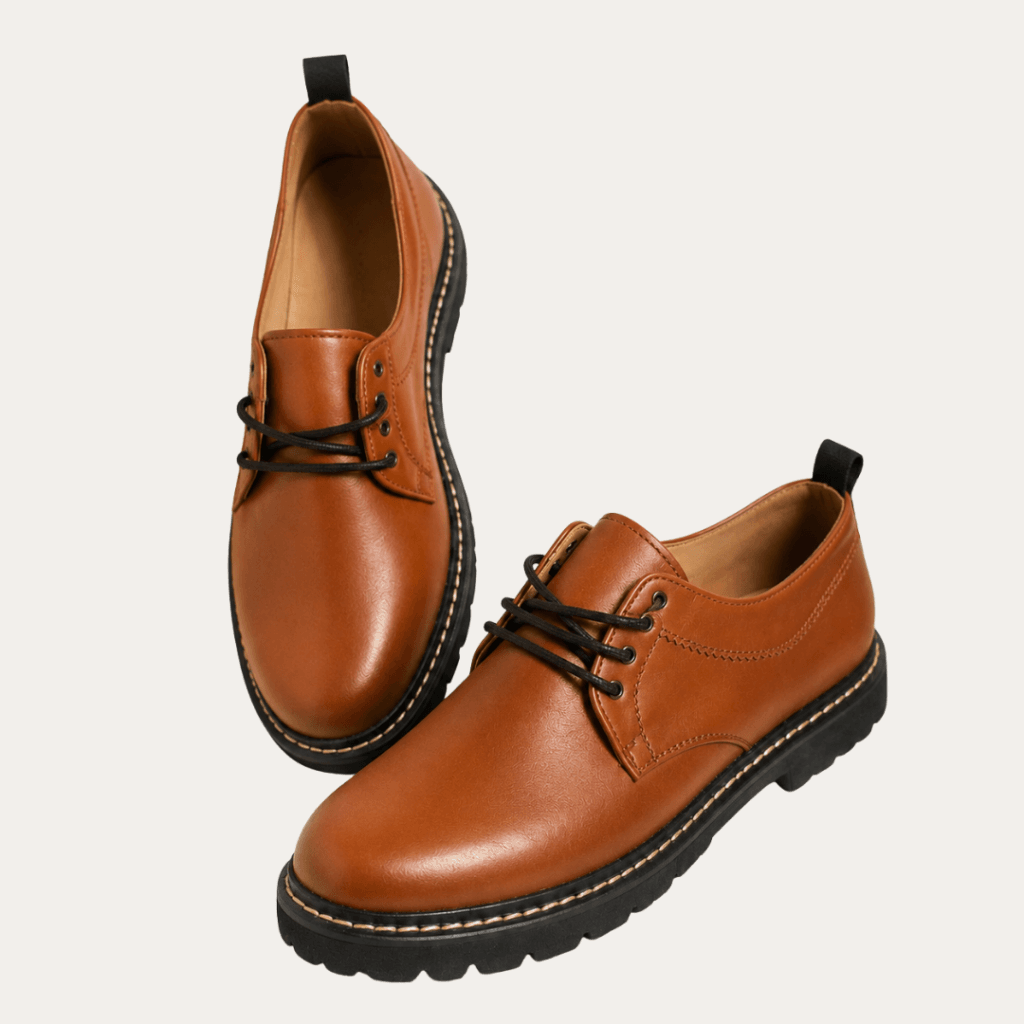
You have probably heard the advice: “Just wear them; they will loosen.” Sometimes that is reasonable. A well-made leather shoe can feel firm when it is new, and the upper may become more flexible as it follows the movement of your foot.
But pain is not proof of quality, and breaking in a shoe should not mean enduring blisters, numb toes or a heel that is being cut with every step. A shoe can soften with wear; it cannot reliably correct the wrong length, a badly placed seam or a shape that does not suit your foot.
The useful question is not simply whether a new shoe feels different. It is whether the sensation is mild, temporary firmness or a clear sign that the fit is wrong.
What a normal break-in can feel like
A new pair may feel:
- Firm through the leather upper
- Slightly stiff where the shoe bends
- Snug but not crushing across the widest part of the foot
- Less flexible than an older, frequently worn pair
- Unfamiliar around the heel without rubbing the skin raw
The shoe should still allow you to stand and walk naturally. Your toes should not be compressed, and you should not need to curl them to keep the shoe on.
Leather may relax slightly across areas that flex, but it does not meaningfully grow in length. Buying a shoe that is clearly too short in the hope that it will stretch is not a break-in plan.
What is not normal
Stop and reassess the fit if you experience:
- Sharp, burning or increasing pain
- Toes pressing hard against the front
- Numbness or tingling
- Skin being cut or rubbed raw
- Persistent pressure on one joint or bony area
- A heel that lifts excessively with every step
- A foot sliding forward and jamming into the toe
- A fit that changes the way you walk
Do not use pain as a sizing tool. If discomfort is strong, persists after you remove the shoe or is connected to an existing foot concern, seek appropriate professional advice rather than forcing the break-in process.
Why some new shoes feel firm
The upper has not flexed yet
New smooth leather and suede can feel more structured than they will after several careful wears. The material begins to flex along the natural movement points of your foot. Suede may feel softer from the beginning, but the correct fit still matters.
The sole is new
A new outsole and insole have not yet moved through repeated walking. Some constructions feel firmer than others. Firm is not automatically uncomfortable; it should feel supportive and stable rather than punishing.
The shoe shape is unfamiliar
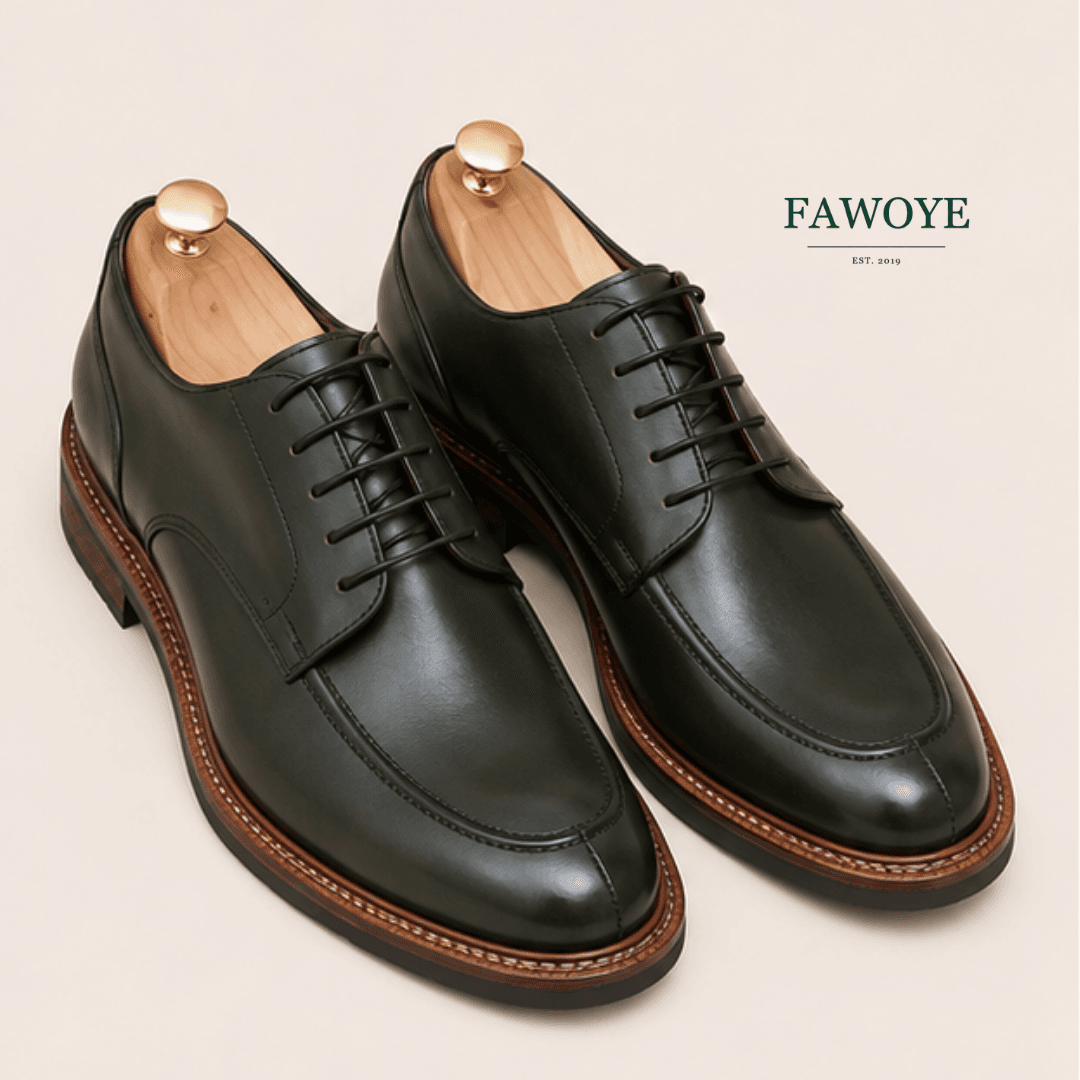
Moving from trainers to a structured Derby, Oxford or loafer can feel different even in the correct size. The shoe holds the foot differently, and a closed lace-up will not feel like a slide.
The last may not suit your foot
A last is the form around which a shoe is shaped. Two shoes labelled with the same EU size can fit differently because one is narrow, another has more toe room and another holds the instep more firmly. Width, instep height, toe shape and heel shape all matter.
This is one reason a made-to-order conversation should include more than a size number.
Check the fit before you “break it in”
Try new shoes indoors on a clean floor so you can assess them without marking the soles.
Wear the type of socks you plan to use. A Derby worn with office socks should be tested that way, not barefoot. Try both shoes because many people have one foot that is slightly larger.
Then check:
- Length: Your toes should not touch or be forced into the front.
- Width: The sides should hold the foot without crushing it.
- Instep: Laces or straps should secure the foot without painful pressure.
- Heel: A small amount of movement can occur in some new styles, but repeated lifting and rubbing is a warning sign.
- Flex point: The shoe should bend close to where your foot bends.
- Walking: Take several natural steps. You should not need to alter your gait.
For Derby-specific guidance, read How Should Derby Shoes Fit? and the FAWOYE size guide.
How to break in new shoes gently
If the fit checks are good and the shoe simply feels firm, introduce it gradually.
Start at home
Wear the pair indoors for 20 to 30 minutes. Walk, sit and pay attention to pressure points. Increase the time over several wears only if the shoe remains comfortable.
Use the right socks
Socks reduce friction and change the volume inside the shoe. Choose a pair similar to what you will wear later. Very thick socks can make an already snug shoe tighter, so the aim is realistic testing, not forcing the upper outward.
Alternate pairs
Do not make a brand-new shoe your only option for a full Lagos workday, long commute or standing event. Carry a familiar pair or alternate shoes while the new pair becomes more flexible.
Lace the shoe properly
Loose lacing can allow the foot to slide and create rubbing; overly tight lacing can create pressure. Adjust the laces from the lower eyelets upward so the foot feels secure without being squeezed.
Keep the leather dry
Do not soak leather shoes or wear them wet to force stretching. Water can affect the finish, structure and adhesive. During Nigeria’s rainy season, allow damp shoes to dry naturally before the next wear.
Avoid aggressive shortcuts
Direct heat, hairdryers, excessive bending, oil mixtures and unverified stretching tricks can damage the shoe. If one precise area needs minor adjustment, ask the maker or a reputable shoe professional whether it can be stretched safely.
Different shoe styles, different expectations
Loafers
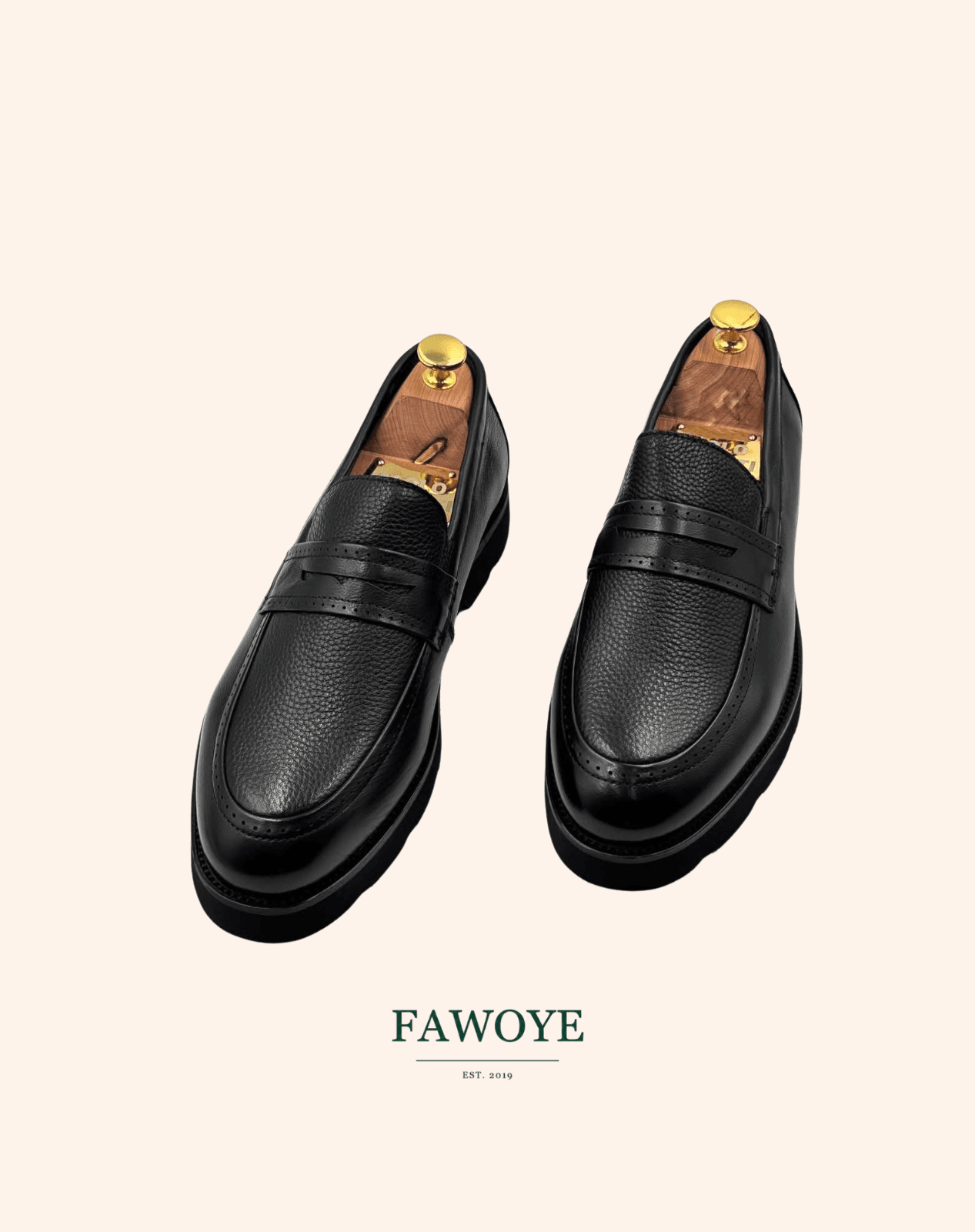
Because loafers have no laces, the heel and instep fit are especially important. A loafer that is too loose may keep slipping; one that is too short may press the toes. The Penny Loafer and Horsebit Suede Loafer may feel different because leather finish, pattern and foot shape affect the fit.
Derby shoes
The open-lacing construction gives some adjustment across the instep. That does not compensate for the wrong length or an unsuitable width. A structured style such as the Wing-Tip Brogue should feel secure, with room for the toes and no sharp pressure.
Monk straps
The buckle allows some adjustment across the instep, but the strap should not be used to force an undersized shoe closed. If considering a Two-Toned Monkstrap, check that the widest part of your foot sits naturally in the widest part of the shoe.
Chelsea boots
Chelsea boots rely on their shape and elastic sides rather than laces. The instep should hold the foot, the heel should not rub aggressively and the toe area should allow natural movement. Read Are Chelsea Boots Good for Nigeria Weather? before planning rainy-season wear.
Slides and sandals
Open footwear does not need the same break-in as a closed dress shoe, but stiff straps can still rub. Your heel and toes should sit on the footbed rather than hanging over its edges.
Made-to-order does not mean “impossible to feel”
A handmade or made-to-order shoe may arrive with the crisp structure of a new pair. That is different from pain. Craftsmanship should support fit and durability; it should not be used to dismiss a customer’s concern.
When ordering, give accurate EU sizing and mention relevant fit details such as a broad forefoot, narrow heel or high instep. If the maker requests measurements, follow the method carefully and measure both feet. Do not guess based only on a different brand’s size, because shoe shapes vary.
Read What Made to Order Means and Handmade vs Factory-Made Shoes for a clearer picture of the process.
What to do when the shoe hurts
Take the shoe off and identify where the pressure occurs. Check your sock, lacing and whether the foot is sliding. Compare both shoes and inspect the inside for a folded lining or obvious rough area.
If the shoe is unworn outside, contact the seller promptly and follow the return, adjustment or remake policy. Continuing to wear a clearly unsuitable pair may mark the sole and make resolution harder.
Minor firmness may settle through short, careful indoor wears. Sharp pain, compressed toes and repeated skin damage are not problems to “push through.” A good shoe should become more familiar—not train you to tolerate pain.
For further reading, see Comfortable Shoes for Standing All Day, What Are Derby Shoes?, What Are Oxford Shoes? and Oxford vs Derby vs Loafer.
Browse the FAWOYE Leather category and Made-to-Order collection when choosing a pair.
Frequently Asked Questions
Should leather shoes hurt when they are new?
No. They may feel firm or less flexible than an older pair, but sharp pain, numbness, compressed toes and skin damage suggest a fit or construction problem.
How long does it take to break in new shoes?
There is no universal number of days. It depends on the material, construction, shoe shape, frequency of wear and your foot. Assess progress through short indoor wears instead of forcing a deadline.
Will leather shoes stretch if they are too small?
Leather may relax slightly across areas that flex, but it will not reliably add the missing length. A shoe that is clearly too short should not be bought on the promise that it will stretch.
Is heel slipping normal in new loafers?
A small amount of movement can occur depending on the design, but repeated lifting that causes rubbing or makes walking unstable is a sign to reassess the size and shape.
Can I use a hairdryer to break in leather shoes?
Direct heat can dry or damage leather and affect construction. Use gradual indoor wear, or ask the maker or a reputable shoe professional about a targeted adjustment.
What if only one shoe hurts?
Feet are not always identical. Check both measurements, the inside of the shoe and the pressure location. Stop wearing the pair if the pain is strong, and contact the maker while the shoe is still in returnable condition.