
Leather slides are easy to wear, but they collect the evidence of everyday Nigerian life quickly: roadside dust, harmattan powder, splashes after rain and the occasional mark from a busy day out. The good news is that most everyday dirt does not require aggressive washing.
The safest approach is simple: remove loose dirt, clean gently with very little moisture, allow the slides to dry naturally and condition only when the leather actually needs it. Leather is not fabric, so soaking it or scrubbing it hard can leave it stiff, misshapen or discoloured.
This guide is for smooth leather slides. If your pair is suede, nubuck, woven material, denim or a mixed-material design, do not use smooth-leather cream across the entire shoe. Follow the care method for each material, or ask the maker before cleaning.
What you need
You do not need a complicated shoe-care kit. Gather:
- A soft, dry brush or clean microfibre cloth
- A second soft cloth
- A small bowl of clean water
- A tiny amount of mild, colourless soap
- A leather conditioner suitable for the leather finish
- Plain paper or a clean, dry cloth for supporting the shape
- A soft toothbrush for the sole edge only, if necessary
Avoid bleach, detergent powder, alcohol-based wipes, strong disinfectant, petroleum jelly and household multipurpose cleaners. They may strip colour, leave a film or dry the leather. Also avoid using polish or conditioner before confirming that it suits the colour and finish.
Step 1: Check the material first
Before water touches the shoe, look closely at the upper and footbed.
Smooth leather usually has a relatively even surface and can be wiped carefully. Suede has a soft nap and needs a suede brush and specialist method. Patent leather has a glossy coating. Clear panels, cork footbeds, rubber soles and woven sections also respond differently to cleaning.
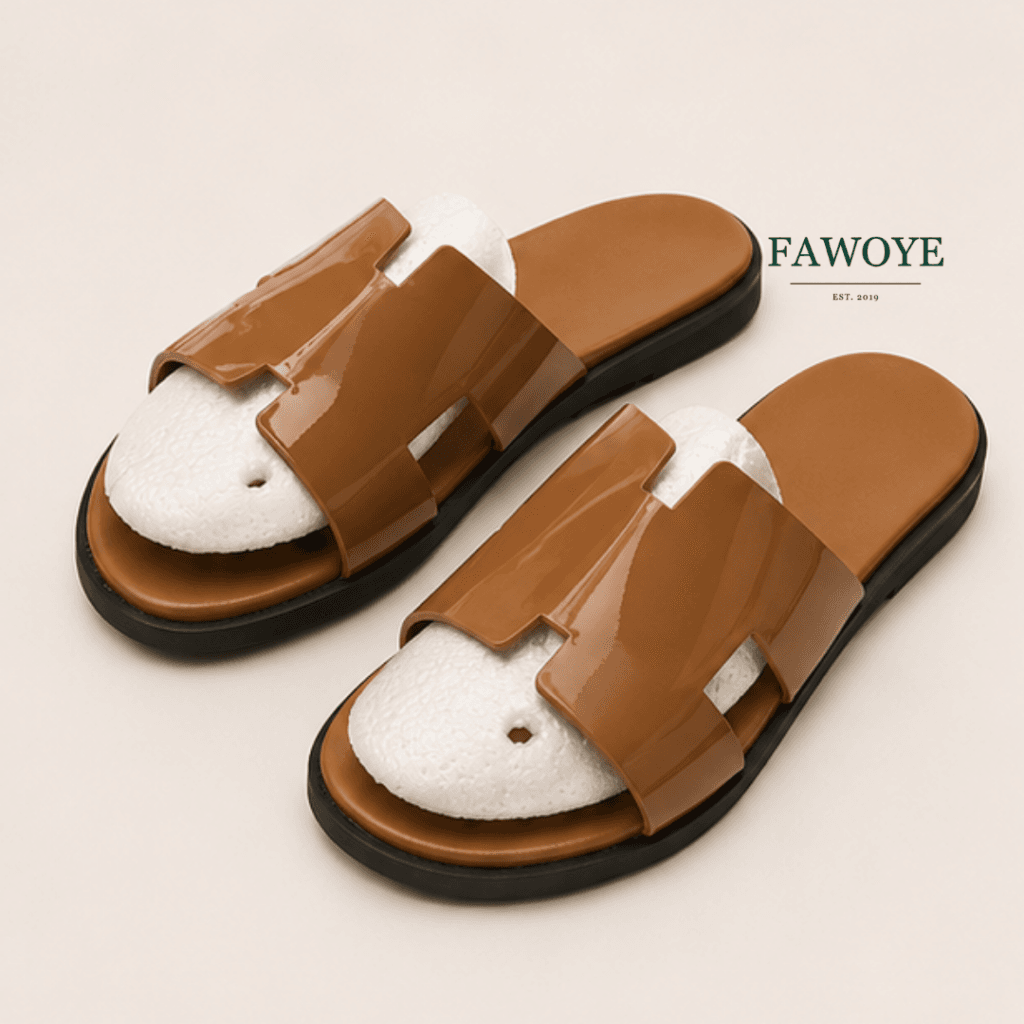
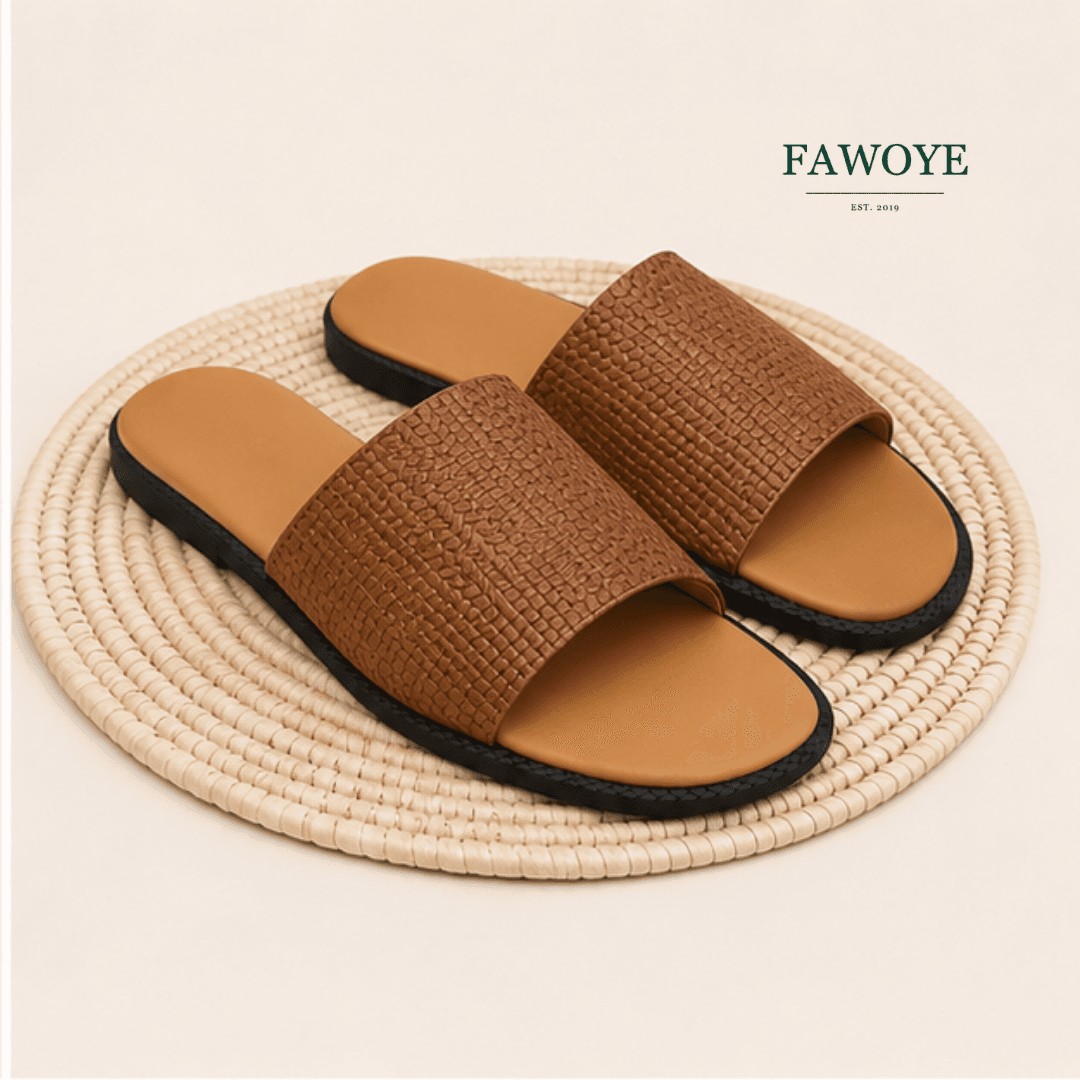
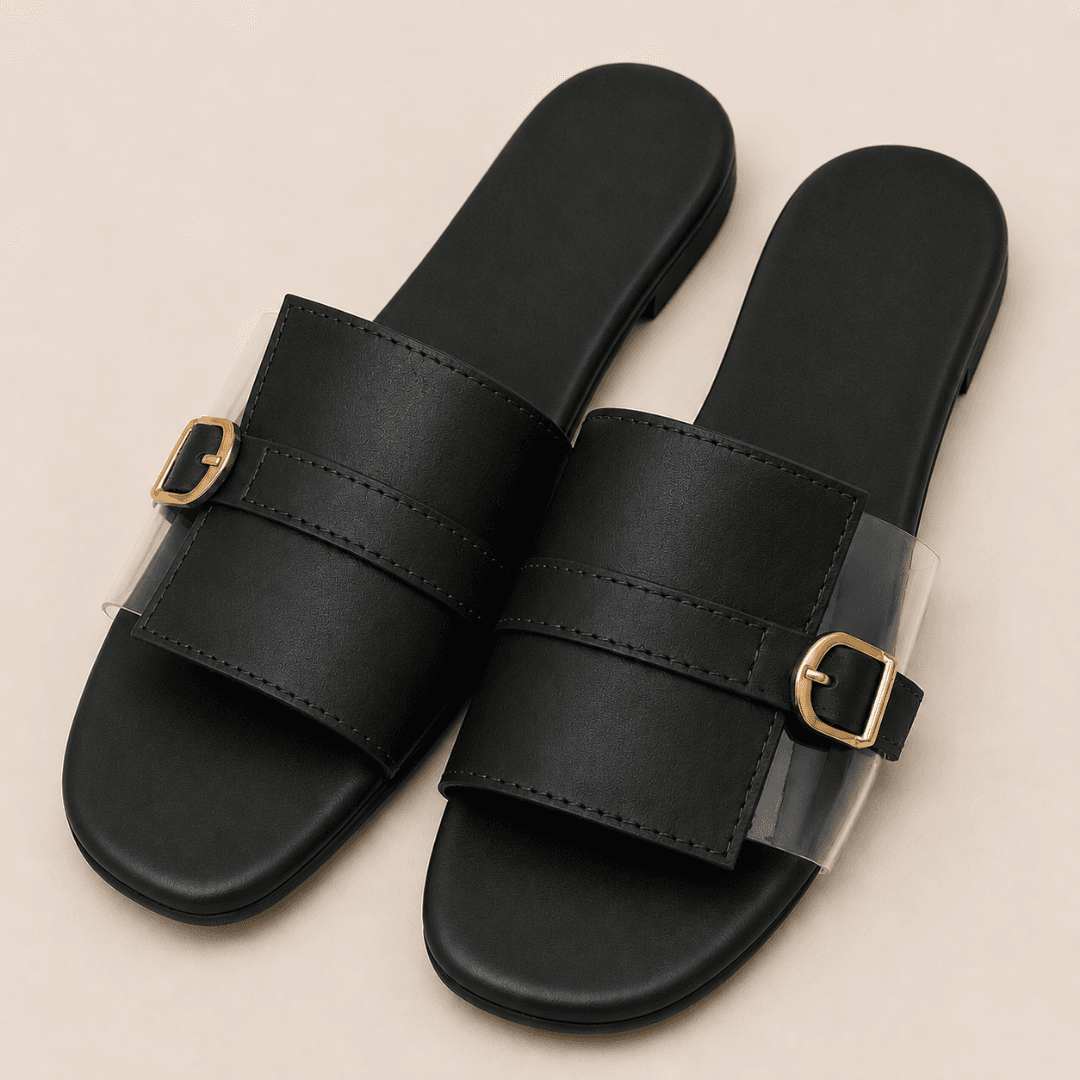
A pair such as the Leather-Band Slide can be treated as smooth leather where the leather band is concerned. On a mixed design such as the Leather and Transparent Single-Strap Slide, clean the clear panel and leather separately rather than covering both in one product.
When uncertain, test any cleaner on a small, hidden area first and allow it to dry before continuing.
Step 2: Remove dust while the slides are dry
Use a dry cloth or soft brush to lift dust from the upper, stitching and the line where the upper meets the sole. Do this before adding moisture. Rubbing water into loose harmattan dust can turn it into a muddy film that is harder to remove.
For frequent wear during harmattan, a quick dry wipe after use is often enough. It prevents dust from settling into seams and keeps you from needing a deeper clean too often.
Step 3: Spot-clean the leather
Mix a very small amount of mild soap into clean water. Dampen a cloth and wring it thoroughly; the cloth should feel barely damp, not wet.
Wipe the leather gently in small sections. Do not pour water on the slides, place them under a tap or leave them in a basin. Pay attention to visible marks, but avoid repeated hard rubbing. Work evenly across the panel so one patch does not dry differently from the rest.
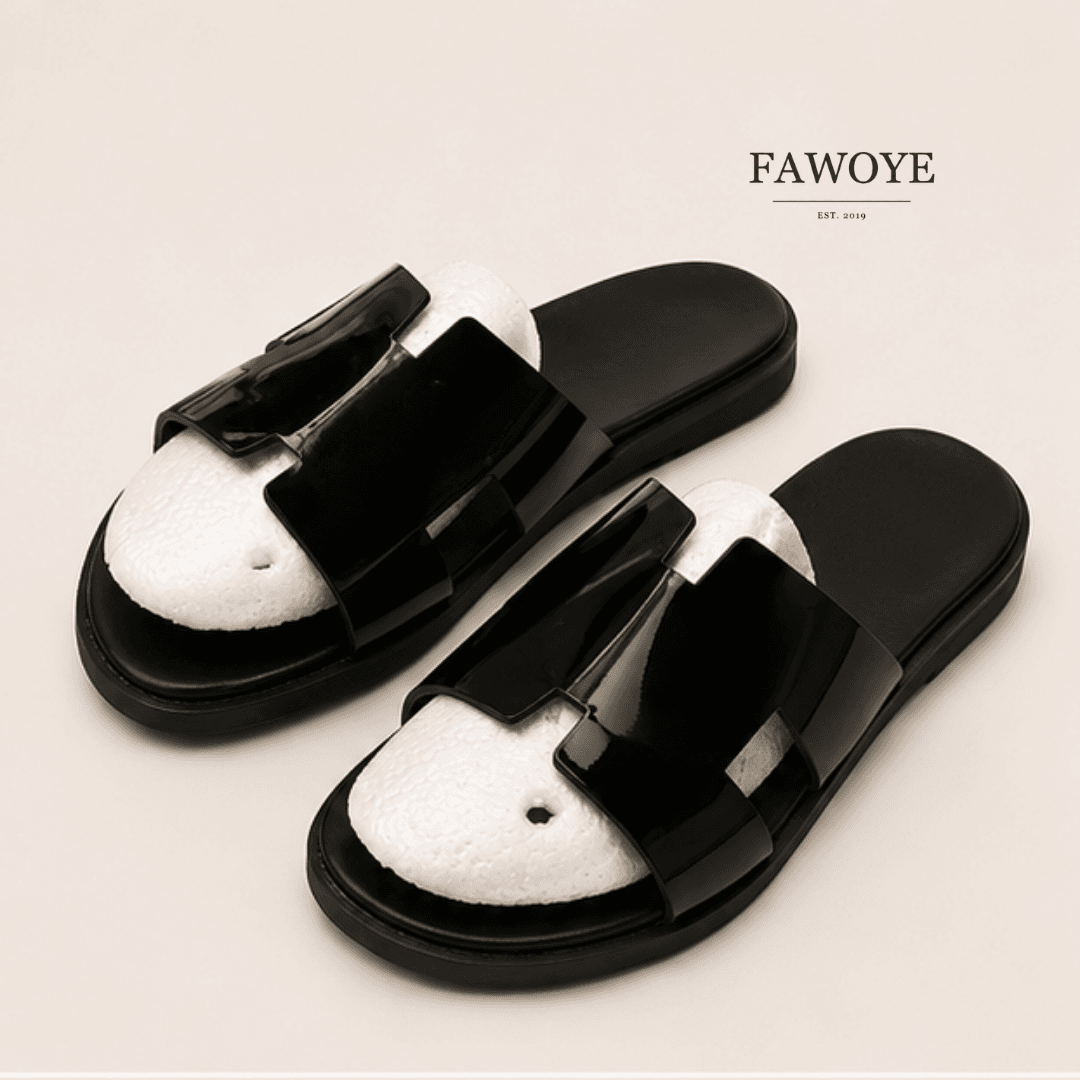
For a structured style such as the Double-Strap H Slide or H-Shaped Slide, clean around the strap joins without pulling or saturating them.
Use a separate clean, slightly damp cloth to remove any soap residue.
Step 4: Clean the footbed carefully
The footbed touches the skin and can collect oil, sweat and dust. Wipe a smooth leather footbed with a barely damp cloth and mild soap, then remove the residue.
Do not soak a cushioned or layered footbed. Trapped moisture can affect adhesive, cushioning and shape. For a cork footbed such as the Cork Footbed Strap Slide, keep water to a minimum and do not cover the cork with ordinary leather conditioner.
If odour is the main concern, allow the slides to air fully between wears. Cleaning them every day with wet products can cause more harm than giving them time to dry naturally.
Step 5: Clean the sole separately
Wipe the outsole and sole edge with a different damp cloth. A soft toothbrush can help lift dried mud from textured rubber, but keep that brush away from the leather upper.
Cleaning the sole separately prevents grit and dirty water from being transferred back to the leather.
Step 6: Dry naturally
Pat away surface moisture and leave the slides in a shaded, ventilated place. Keep them away from direct afternoon sun, a hairdryer, radiator or other strong heat. Rapid drying can make leather stiff and may affect its shape or finish.
If the upper has become slightly damp, place plain paper or a clean dry cloth loosely beneath the straps to support them. Do not overfill the shoe or use newspaper where ink could transfer.
After a rainy-season splash, wipe off dirty water as soon as practical and let the pair dry completely before wearing it again. Do not store damp slides inside a closed box or nylon bag.
Step 7: Condition sparingly
Once the slides are completely dry, assess the leather. If it feels normal and looks healthy, conditioner may not be necessary. Over-conditioning can make some leather greasy or alter its colour.
When the surface feels dry, apply a small amount of a suitable conditioner with a soft cloth. Test first, use a thin layer and buff gently according to the product instructions. Conditioner belongs on compatible smooth leather—not suede, clear panels, fabric, rubber or cork.
Coloured and light leather can darken temporarily or permanently when treated, which is why the patch test matters.
How to deal with common marks
Harmattan dust
Brush or wipe it away while dry. Clean seams gently and repeat after wear rather than allowing layers to build up.
Rain splashes and mud
Let wet mud become touch-dry, then brush away the loose dirt. Follow with the barely damp cleaning method. Do not scrub wet mud deeper into the leather.
Oil or food stains
Blot immediately without spreading the mark. Avoid online household mixtures that promise instant removal; oils can penetrate leather and home treatments may make the patch larger. For a valuable or strongly coloured pair, ask a leather-care professional or the maker.
Darkened footbeds
Some colour change from regular contact is normal. Gentle cleaning may reduce surface dirt, but it may not return a worn footbed to its original shade. Aggressive scrubbing is more likely to damage the finish than restore it.
What not to do
- Do not put leather slides in a washing machine.
- Do not soak them in soapy water.
- Do not use bleach, harsh detergent or alcohol wipes.
- Do not dry them under strong sun or with direct heat.
- Do not use leather cream on suede or fabric.
- Do not wear or store the pair while it is still damp.
- Do not assume every section of a mixed-material slide needs the same treatment.
A simple care routine for Nigeria
After a dusty day, wipe the slides dry before storing them. During the rainy season, rotate pairs so a damp shoe has enough time to air. During harmattan, keep a soft cloth near your shoe rack for quick dust removal.
Store clean, dry slides in a ventilated area away from direct sunlight. Avoid stacking heavy shoes on the straps. A small routine after wear is safer than an aggressive deep clean months later.
For more guidance, read Leather Slides vs Rubber Slides, How to Tell Genuine Leather from Fake, Men’s Leather Slides in Nigeria, Women’s Leather Slides and What to Wear with Slides.
Browse the FAWOYE Slides category for handmade, made-to-order options.
Frequently Asked Questions
Can I wash leather slides with water?
Use only a barely damp cloth for compatible smooth leather. Do not soak leather slides, place them under running water or put them in a washing machine.
Can I use detergent to clean leather slippers?
Strong detergent can dry or discolour leather. Use a tiny amount of mild, colourless soap, patch-test first and remove the residue with a clean damp cloth.
How do I clean leather slides after rain?
Wipe away surface water and dirt, clean gently if needed, then dry the slides in a shaded, ventilated place. Keep them away from direct heat and do not store them until fully dry.
Can leather conditioner be used on every slide?
No. Conditioner must suit the leather finish. Do not apply ordinary leather conditioner to suede, fabric, rubber, cork or clear panels.
How often should leather slides be cleaned?
Remove dust after wear and spot-clean when necessary. A heavy wet clean is rarely needed if you maintain the pair regularly.
What should I do if a stain will not come out?
Stop before repeated scrubbing damages the finish. Contact the maker or a reputable leather-care professional, especially for oil, ink, light-coloured leather or a high-value pair.