The safest way to identify leather is to combine several clues: the seller’s material description, the surface and edges, the backing, the way the material bends and the care instructions. No single home trick proves everything.
Also, genuine leather is a broad material description, not a promise that an item is the finest grade available. A well-made shoe depends on the leather, construction, lining, sole, finishing and fit together.
Start with the product description
Look for a specific material statement. Useful descriptions name the upper clearly: smooth leather, suede, woven material, denim, synthetic material or a mixed upper. Be cautious when a seller calls every shoe “leather” even when the photograph clearly shows fabric or suede.
At FAWOYE, designs may be available in different suitable materials depending on the model and current availability. Confirm the exact material for the pair you are ordering rather than assuming every variation matches one photograph.
Read what made to order means before choosing a material variation.
Check the surface—but expect variation
Natural leather can show small differences in grain, pores and tone. Those variations can be subtle because leather may be sanded, embossed, corrected or coated during finishing. A perfectly uniform surface may suggest a synthetic or heavily corrected finish, but uniformity alone is not proof.
Synthetic materials can reproduce grain convincingly. That is why visual inspection should be combined with edge, backing and supplier information.
Look at an unfinished edge
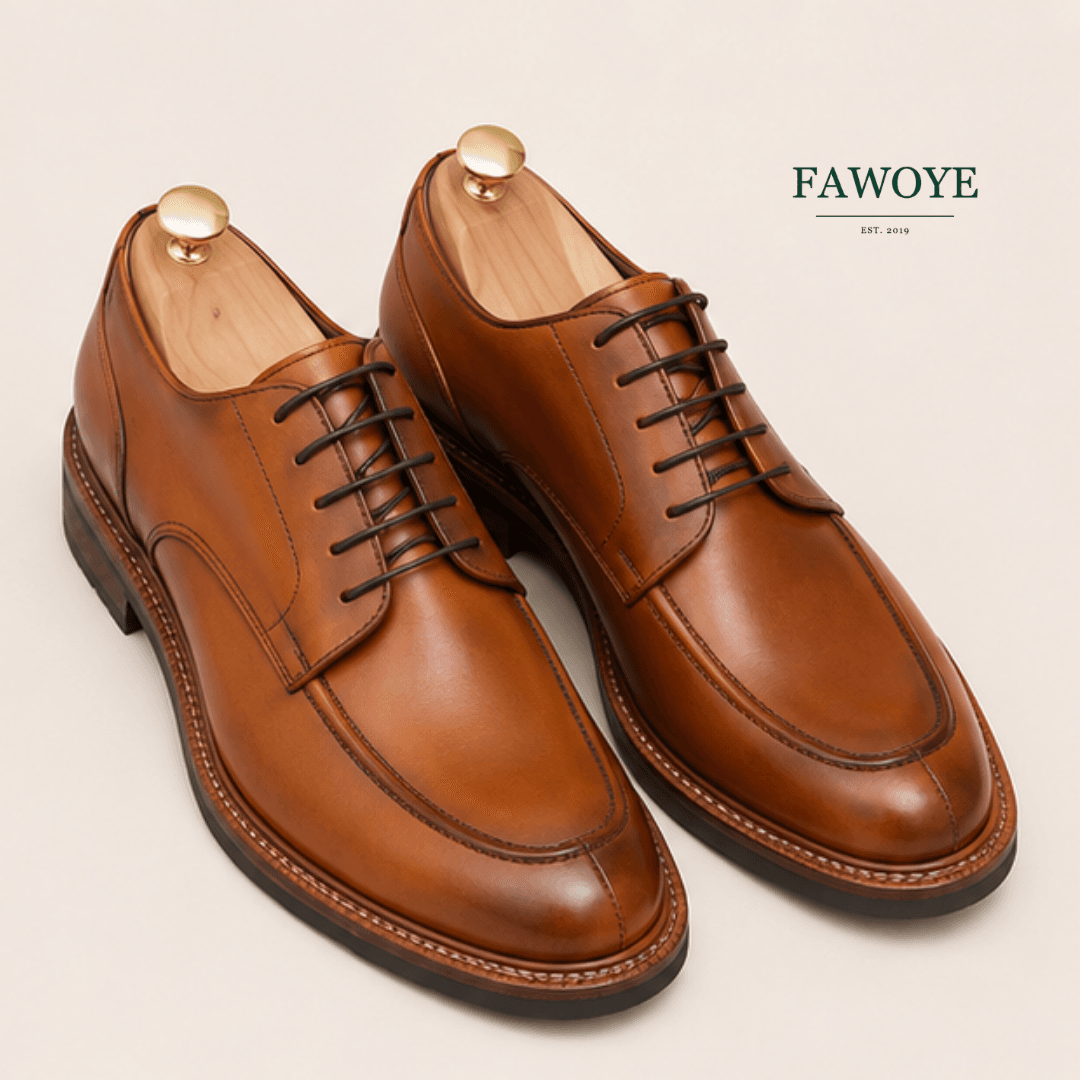
Where an edge is visible, leather may show a fibrous structure rather than a smooth plastic film. Synthetic material often has a fabric backing, foam layer or clearly separate surface coating.
Do not cut or peel a finished product to test it. Inspect only edges that are naturally exposed, such as beneath a strap, inside a sample swatch or around a punched hole.
Observe how the material bends
When gently flexed, natural leather often forms fine, irregular creases. Some synthetics create more uniform folds or hold a stiff shape. However, thickness, coatings and construction change how any material behaves, so this is only one clue.
Never force a shoe sharply just to test it. Excessive bending can damage the upper, lining or finish.
Smell is a clue, not proof
Leather often has a characteristic smell, while some synthetics smell more like plastic or chemicals. But adhesives, polish, packaging and tanning finishes can change the scent. Fragrance can also be added.
Use smell only as supporting information, never as the final verdict.
Avoid damaging “tests”
Online advice sometimes recommends burning the material, scratching it aggressively or pouring water onto it. These tests can stain, weaken or permanently damage a shoe and still produce unclear results.
Do not:
- hold a flame to footwear;
- soak the upper;
- scrape the surface with a blade;
- apply acetone or harsh solvent;
- pull layers apart;
- use leather cream on suede to see what happens.
If the material matters to your purchase, ask the seller for a written description or a sample rather than destroying the product.
Understand common labels
Full-grain leather
Full-grain leather retains the natural grain surface. It can show natural variation and may develop character with wear, depending on its finish.
Top-grain leather
Top-grain leather has had the surface altered or corrected to some degree. The term covers a wide range of finishes and qualities.
“Genuine leather”
This generally indicates that the material contains real leather, but the phrase does not tell you the specific grade, thickness or construction. Treat it as a starting description, not a quality ranking.
Suede
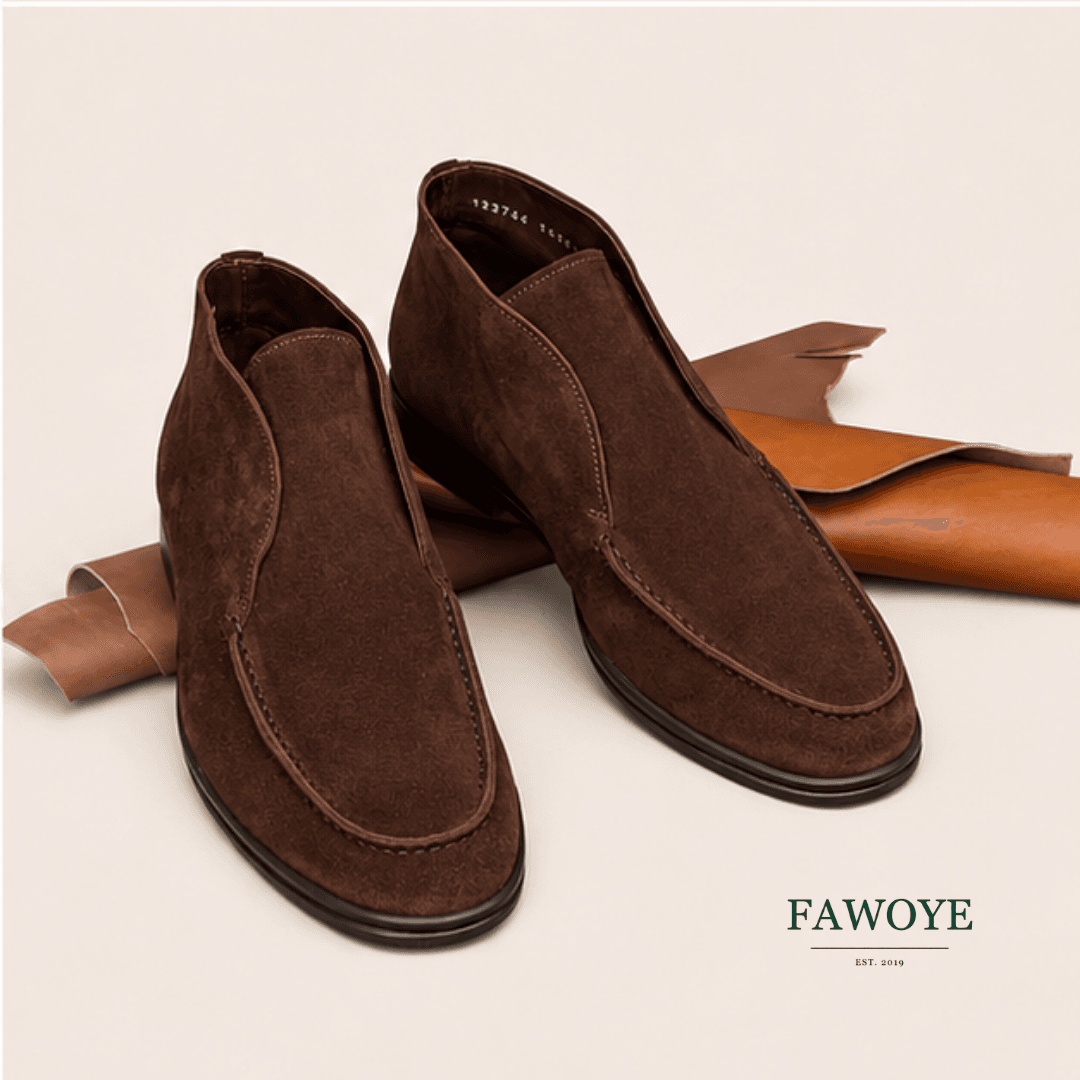
Suede has a soft, napped surface. It is leather, but it needs different cleaning from smooth leather. Do not use standard leather cream on suede.
Bonded leather
Bonded leather uses leather fibres or scraps combined with binders. Its composition and durability differ from a solid leather hide.
PU or synthetic leather
Synthetic leather uses manufactured layers designed to resemble leather. It may be easier to keep uniform, but wear and breathability vary by material and construction.
Real leather can still be poorly made
A real-leather label does not excuse uneven stitching, weak sole attachment, poor lining, painful fit or careless finishing. Inspect the complete pair:
- symmetrical shape;
- neat stitching;
- secure sole attachment;
- clean edge finishing;
- stable hardware;
- accurate size information;
- material-specific care advice.
Our handmade versus factory-made shoes guide explains why production method and material name are not enough on their own.
Questions to ask before buying
Ask the seller:
- What is the exact upper material?
- Is the whole upper that material or is it mixed?
- Is the lining leather, textile or synthetic?
- Is the colour or material in the photograph the same as the pair being ordered?
- What care products are safe for it?
- Can the material choice be confirmed in writing?
Clear answers are more useful than vague promises such as “original quality.”
Care should match the material
For smooth leather, remove dust with a soft cloth and use a suitable leather product sparingly after checking the finish. For suede, use a suede brush and material-specific cleaner. For woven or denim footwear, follow fabric-appropriate care.
During rainy season, do not assume leather shoes are waterproof. Let damp pairs dry naturally away from direct heat. During harmattan, remove dust before conditioning or brushing.
For a related material-specific routine, see how to clean leather slides. Suede should be cleaned with a suede brush and suede-specific cleaner rather than smooth-leather cream, and both smooth leather and suede should be stored away from damp and harsh direct heat through harmattan and the rains.
FAWOYE material examples
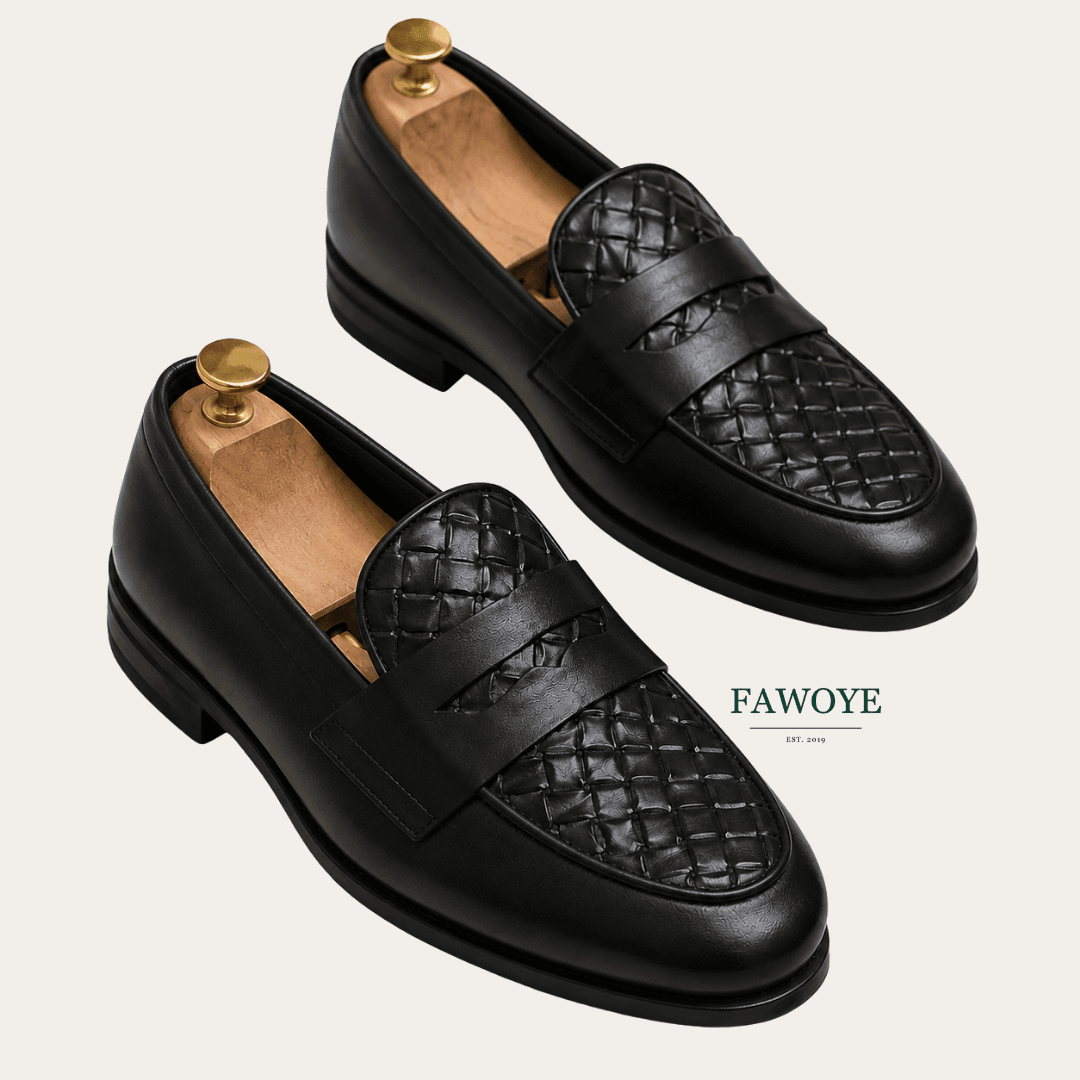
The Horsebit Suede Loafers demonstrate a suede upper that should be brushed, not polished with smooth-leather cream. Designs such as Penny Loafers, Two Toned Monkstrap and Wing Tail Brogue should be ordered only after confirming the material and colour currently available for the chosen variation.
FAQs
Is genuine leather always high quality?
No. The phrase identifies a broad material category but does not guarantee the best grade, construction or finishing.
Can fake leather have a realistic grain?
Yes. Modern synthetic materials can reproduce grain and colour convincingly, so use several clues and confirm the specification.
Is suede real leather?
Suede is leather with a napped surface. It requires different care from smooth leather.
Does the water-drop test prove leather is real?
No. Coatings can change absorption, and water can stain or damage the material. It is not a reliable or safe final test.
Should real leather smell a certain way?
Leather often has a recognisable scent, but adhesives, finishes and fragrance make smell an unreliable proof on its own.
What is the best way to confirm a FAWOYE shoe’s material?
Check the product information and confirm the exact material for the selected design or variation before production begins.