
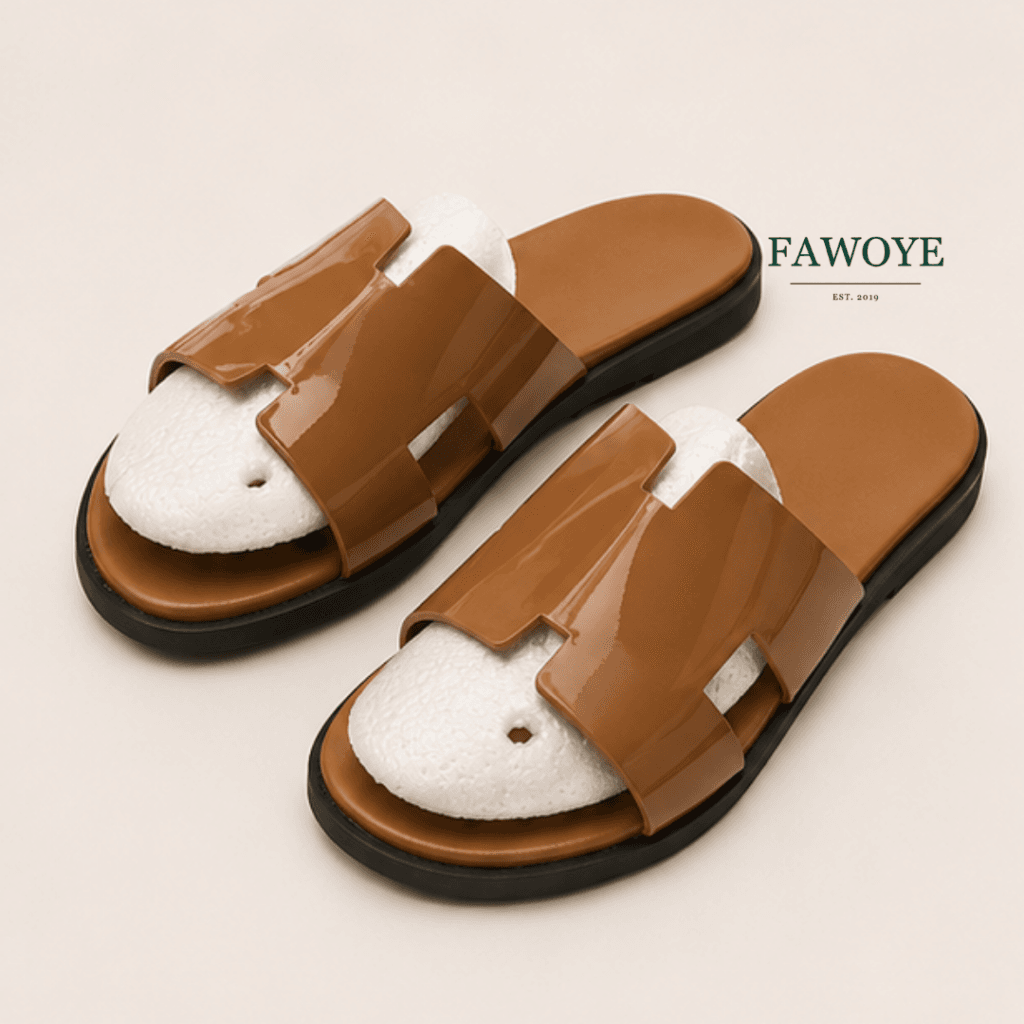
Choose leather slides when you want a polished pair for native wear, visits, travel and smart-casual dressing. Choose rubber slides for wet areas, poolside use and rough, low-maintenance errands.
The important difference is not that one material is always better. Each belongs in a different part of your wardrobe.
Quick comparison
| Question | Leather slides | Rubber slides |
|---|---|---|
| Best for native wear | Yes | Usually too casual |
| Best around water | No | Usually better |
| Dressier appearance | Yes | More casual |
| Care required | Material-specific care | Often simple washing |
| Harmattan dust | Wipe or brush promptly | Usually easy to rinse |
| Rainy-season errands | Only with caution | More practical if designed for grip |
What counts as a leather slide?
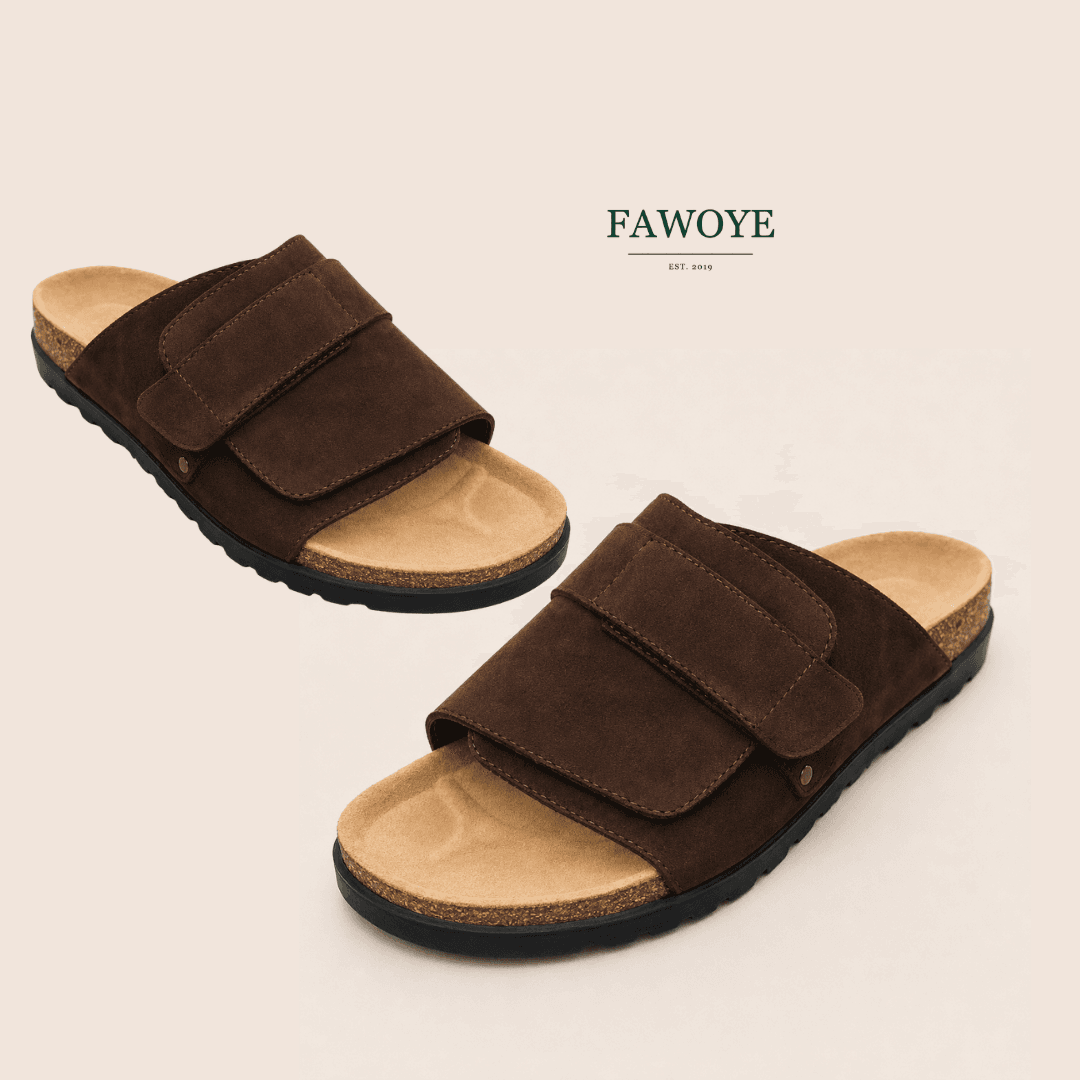
A leather slide uses leather in the upper, lining, footbed or a combination of these. Some designs mix leather with suede, woven leather, denim, cork or synthetic sole materials. Check the exact product description rather than assuming the whole shoe is one material.
Smooth leather, suede and woven leather also need different care. Suede is leather, but it should not be polished with ordinary smooth-leather cream.
What counts as a rubber slide?
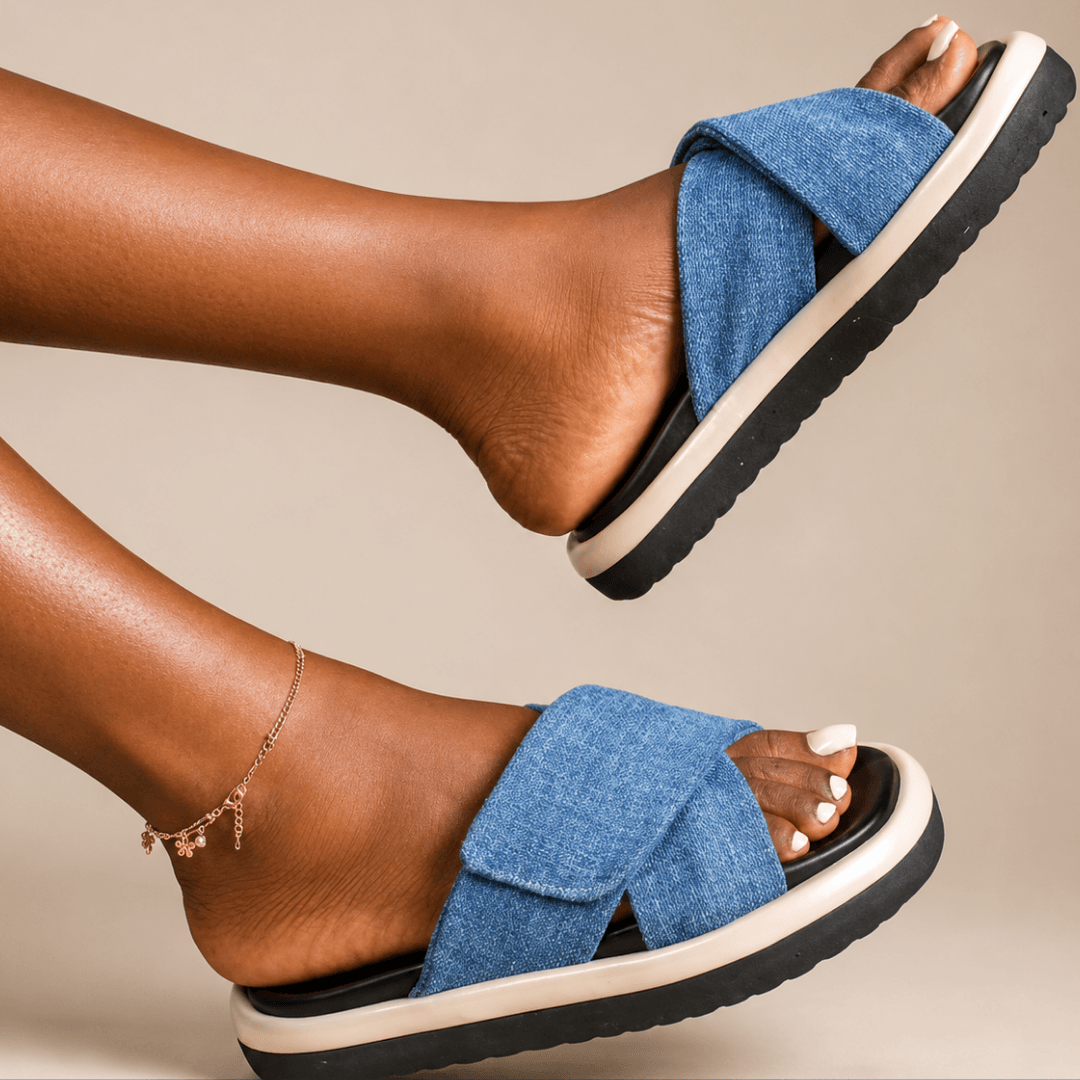
“Rubber slide” is often used loosely for moulded casual slides, including pairs made from rubber-like synthetic compounds. Their exact flexibility, grip and durability depend on the formulation and construction.
A rubber-looking sole does not mean the entire slide is rubber. Likewise, a leather upper may sit on a durable synthetic outsole. Read the material specification.
Style: where leather wins
Leather slides look more intentional with:
- kaftan and senator wear;
- linen and relaxed tailoring;
- dresses and wide-leg trousers;
- smart travel outfits;
- home visits and informal events;
- polished weekend dressing.
A clean band, woven upper or crossed strap can complement native wear without competing with embroidery. Read men’s leather slides in Nigeria, what to wear with slides and what shoes to wear with kaftan.
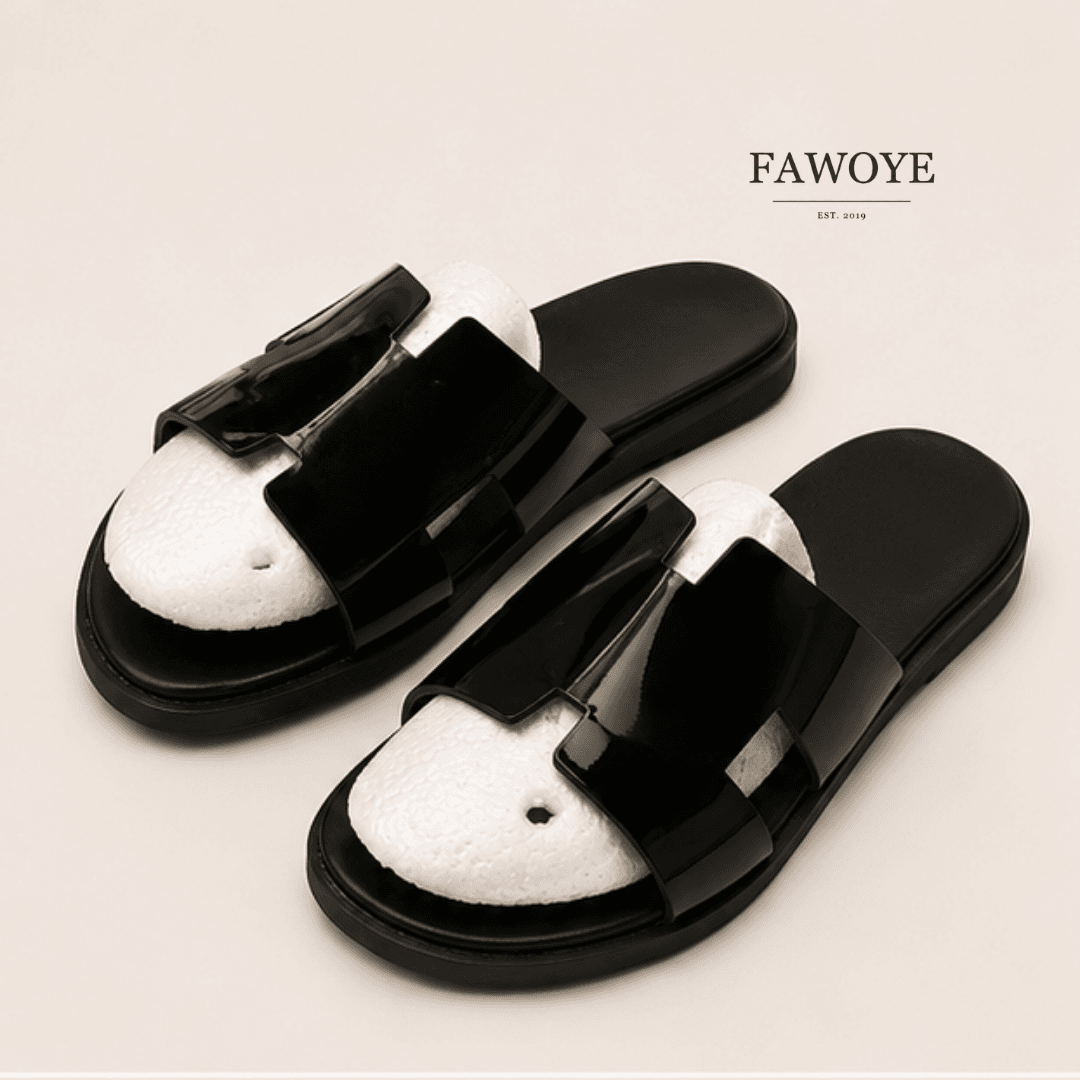
For women seeking a refined open option, FAWOYE’s Quilted Women’s Sandal and Strappy Block Heel Mule cover relaxed and dressier occasions.
Water: where rubber wins
Leather does not enjoy repeated soaking. Water can affect colour, shape, adhesives, lining and finish. Even when a leather slide has a durable sole, that does not make the upper suitable for bathrooms, poolside use or heavy rain.
Rubber or moulded synthetic slides are usually more practical for:
- wet bathroom floors;
- poolside changing areas;
- quick trips during heavy rain;
- washing areas;
- situations where the pair must be rinsed frequently.
Grip still matters. A wet sole can be slippery regardless of the material, so inspect the tread and walk carefully.
Comfort depends on design, not only material
A soft leather upper can adapt to the foot, while a rigid strap can rub. A moulded rubber slide may feel cushioned, while a poorly shaped one may slide around. Check:
- whether the heel and toes stay on the footbed;
- whether the strap holds without cutting;
- whether the sole bends at a natural point;
- whether the foot slides forward;
- whether the outsole has useful grip;
- whether the width suits the foot.
Do not assume a painful strap will automatically become comfortable. See comfortable shoes for standing all day and the shoe break-in myth.
Durability is about use
A well-made leather slide can serve for years when worn in suitable conditions and cared for properly. A practical rubber slide may tolerate water better but can still split, compress or lose tread.
Ask what job the pair needs to do:
- If it will live beside the bathroom, choose a water-friendly pair.
- If it will complete kaftans and relaxed outfits, choose a refined leather slide.
- If it will handle long walking, inspect support and fit rather than relying on the word “comfortable.”
- If it will be your only pair, consider whether your everyday route includes rain, rough roads or formal visits.
Care for leather slides
- Wipe dust with a soft, dry cloth.
- Remove light marks using a product suited to the actual material.
- Let damp slides dry naturally away from direct heat.
- Keep suede away from ordinary leather cream.
- Store only when clean and fully dry.
- Rotate pairs so the footbed can air.
Use the full guide to cleaning leather slides.
Care for rubber slides
Rinse or wipe according to the manufacturer’s instructions, use mild soap where suitable, and dry them before storage. Avoid harsh chemicals that can discolour or weaken the material. Do not leave them against intense heat for long periods, as some compounds can warp.
Rainy season and harmattan
During rainy season, rubber slides are more forgiving for unavoidable water exposure. Leather slides should be reserved for drier routes or protected transport.
During harmattan, both materials collect dust. Wipe smooth leather gently before conditioning; brush suede dry; rinse or wipe rubber as appropriate. Never apply one care routine to every material.
Which should you buy?
Choose leather slides for style, native wear and smart-casual use.
Choose rubber slides for water, rough errands and simple maintenance.
Many people need both because they solve different problems. Buying the right material for the setting is better than forcing one pair to do everything.
Frequently Asked Questions
Can leather slides get wet?
Light accidental splashes can happen, but repeated soaking can damage leather and construction. Dry naturally away from heat.
Are rubber slides better for rainy season?
They are generally more practical around water, provided the outsole has useful grip.
Can I wear leather slides with senator or kaftan?
Yes. A refined leather slide works well with relaxed native wear when the colour and detailing complement the outfit.
Are all moulded slides made from natural rubber?
No. Many use rubber-like synthetic compounds. Check the material description.
Which slides are more comfortable?
Comfort depends on fit, strap shape, footbed and support—not only whether the upper is leather or rubber.
How do I clean suede slides?
Use a suede brush and suede-appropriate cleaner. Do not use ordinary smooth-leather cream.