
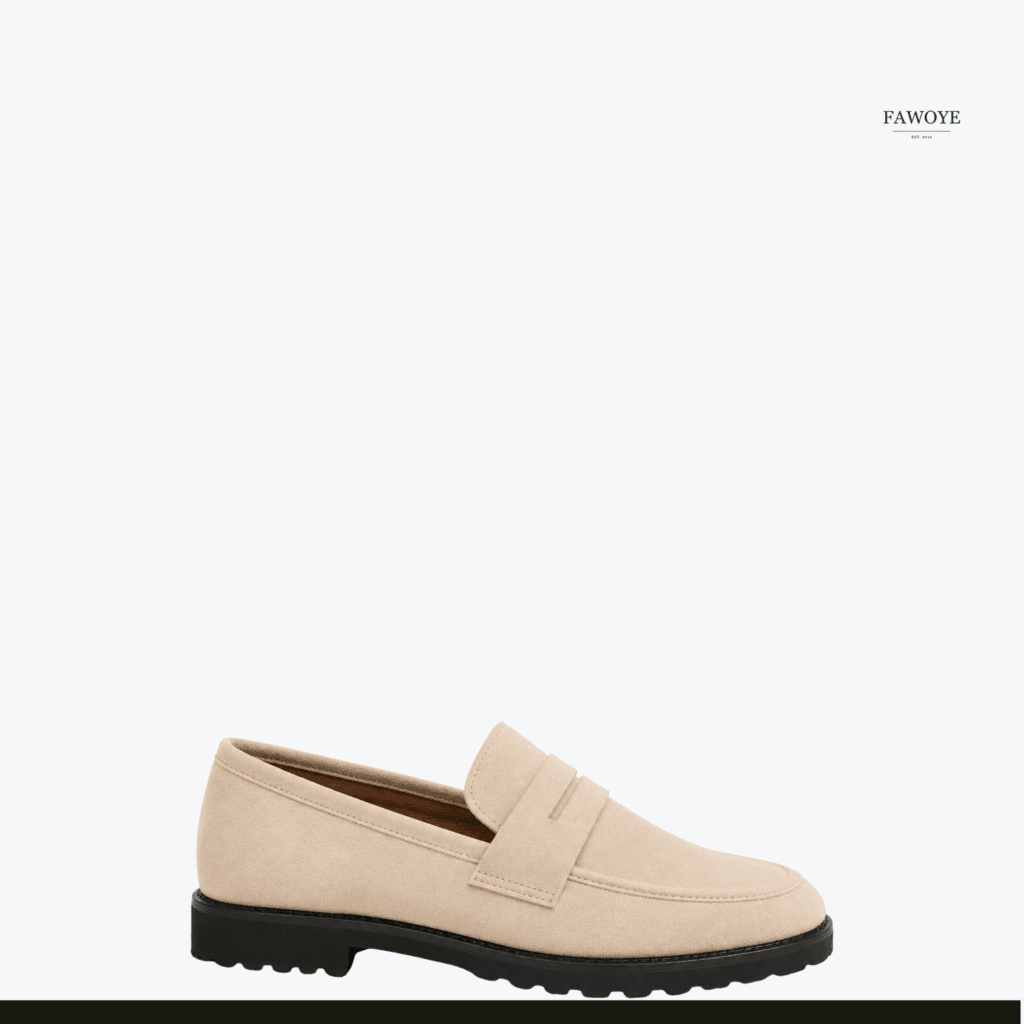
Suede looks rich because of its soft, raised surface. That same texture also holds dust more easily than smooth leather. The answer is not aggressive washing. Good suede care is gentle, dry-first and patient.
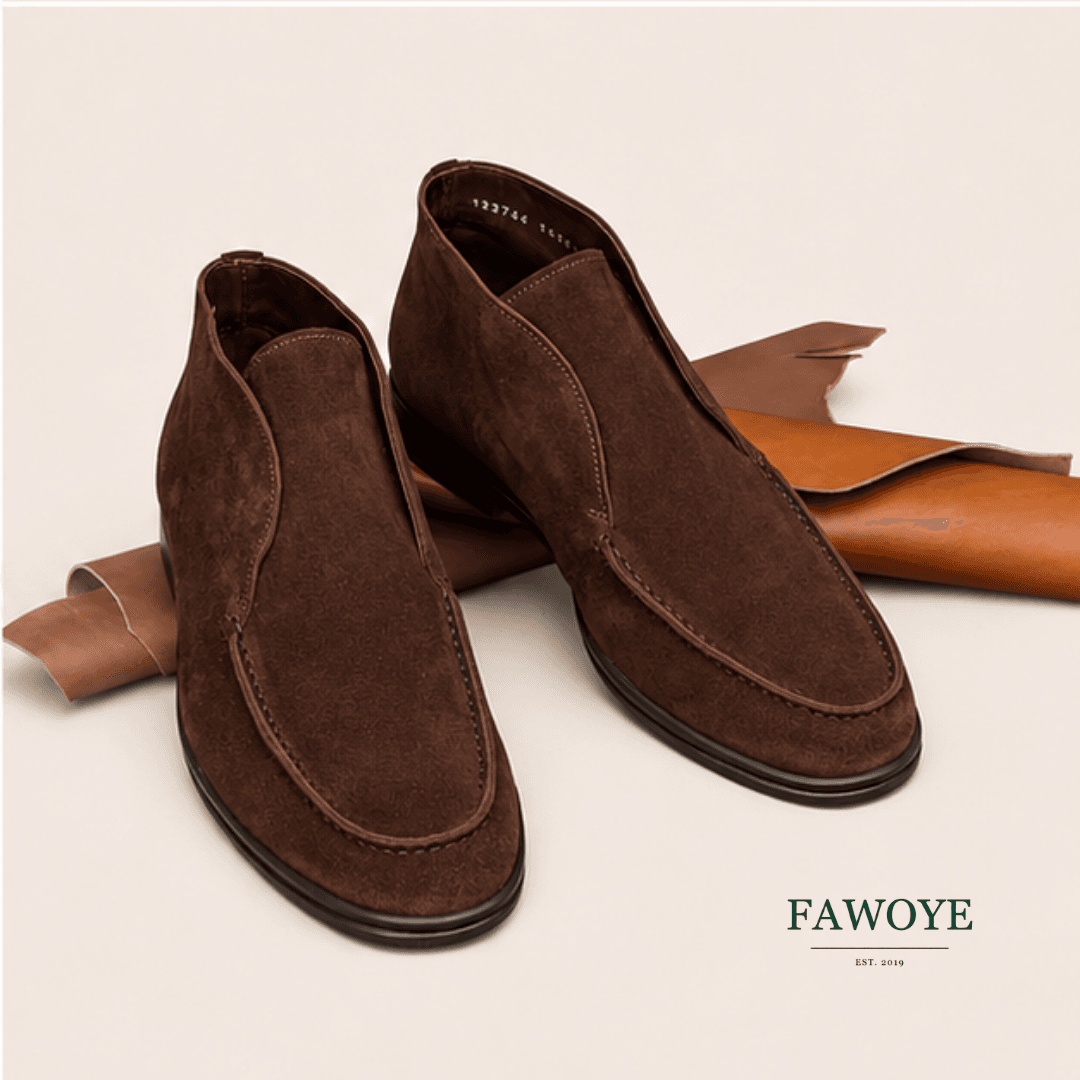
This method suits suede loafers, Chelsea-style boots and other everyday suede footwear. Always check any care instructions supplied with your pair.
What you need
- a suede brush or clean soft-bristled brush;
- a suede eraser or clean plain pencil eraser for small marks;
- a clean white cloth;
- absorbent paper or shoe trees;
- a suede protector formulated for footwear, if suitable.
Avoid coloured cloths that may transfer dye.
Step 1: Let the shoe dry
If the shoe is damp, do not scrub it. Blot excess moisture gently, stuff it with absorbent unprinted paper and allow it to dry naturally in a ventilated, shaded place.
Do not use a hairdryer, radiator or intense direct sun. Fast heat can affect the shape, colour and feel of the material.
Step 2: Remove the laces
If the shoe has laces, take them out so you can reach the tongue and edges. Clean the laces separately according to their material.
Step 3: Brush away surface dust
Brush gently in one direction to lift loose dust. Work across the whole shoe instead of brushing only the dirty patch; this helps the finish remain even.
Nigeria’s harmattan dust may need several light passes. Pressure is less useful than patience.
Step 4: Treat small dry marks
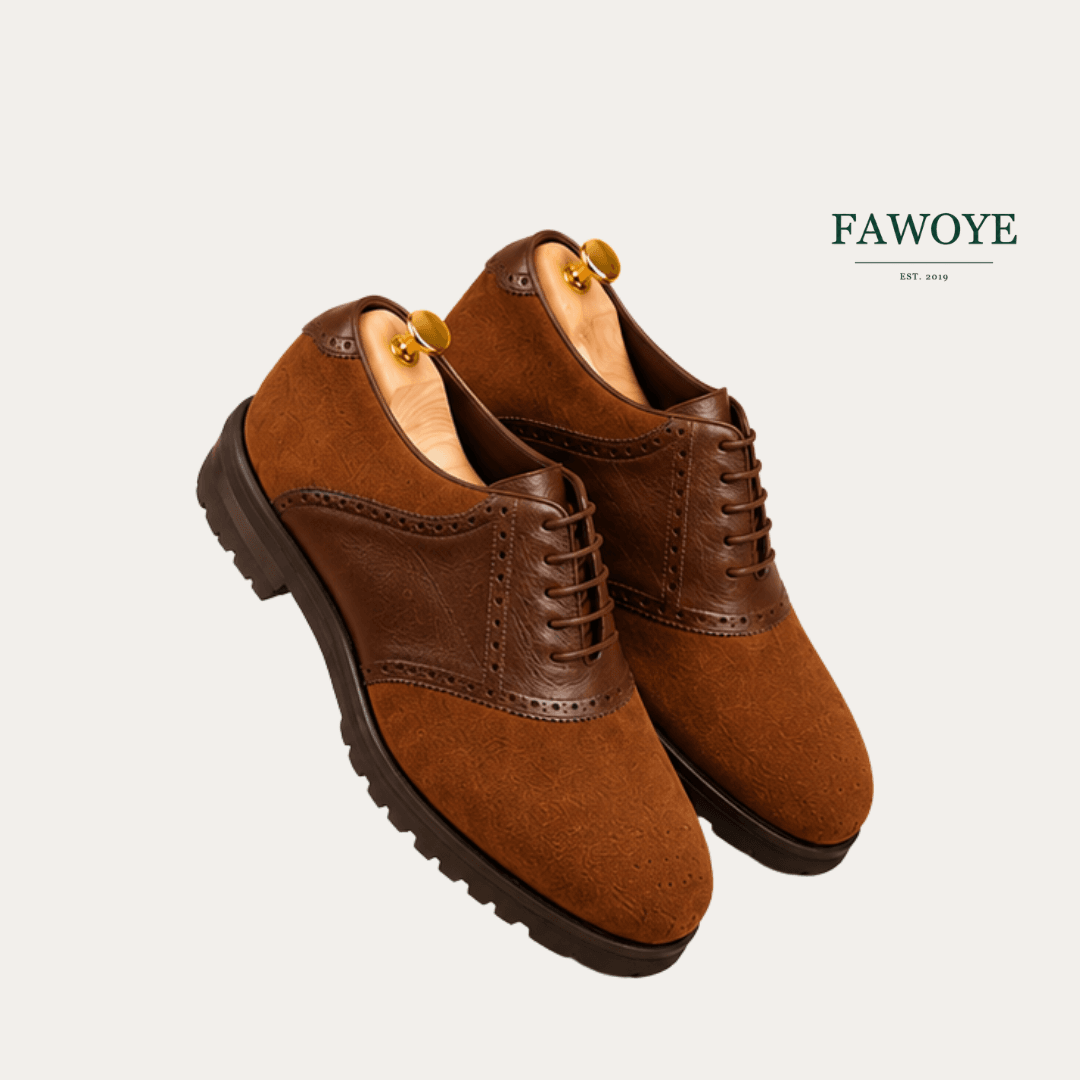
Rub a suede eraser lightly over a dry scuff or mark. Stop if the colour begins to change. Brush the area afterward to lift the nap.
For expensive, light-coloured or deeply stained suede, professional cleaning is safer than experimenting with household mixtures.
Step 5: Handle a fresh spill
Blot—do not rub—a fresh liquid spill with a clean white cloth. Rubbing pushes moisture deeper and spreads the mark. Allow the shoe to dry, then reassess before brushing.
Oil, dye and unknown chemical stains should be treated by a specialist.
Step 6: Restore the nap
Once the shoe is fully dry and clean, brush it lightly again. This separates compressed fibres and restores the soft suede appearance.
The method works well for pairs such as FAWOYE Horsebit Suede Loafers and the Suede Loafer. If you are deciding between leather finishes, compare styles in leather sandals in Nigeria and learn the material basics in how to tell genuine leather from fake.
Step 7: Apply protector carefully
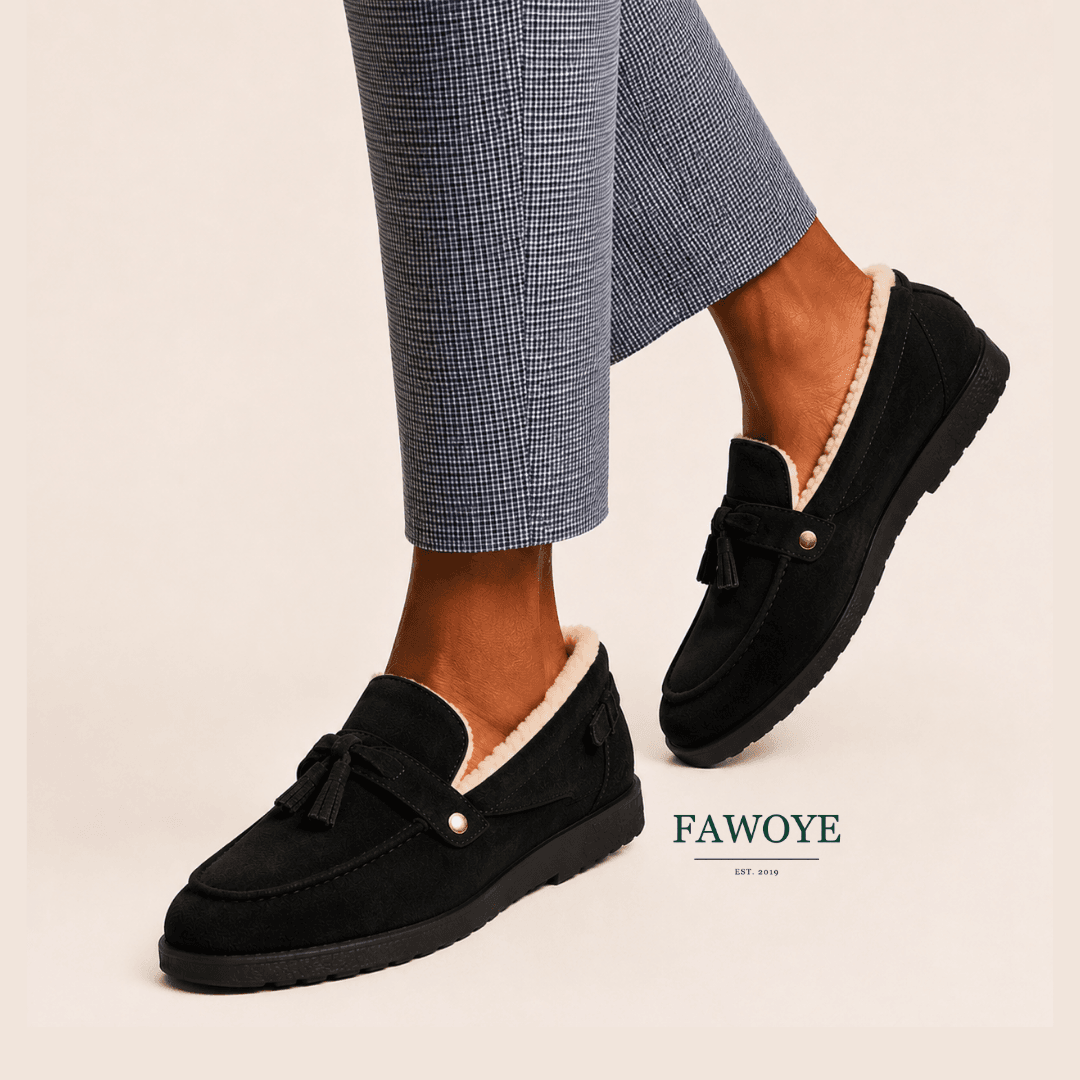
Test any protector on a hidden area first. Follow the product instructions, spray from the recommended distance and allow the shoes to dry fully. A protector can reduce the impact of light moisture and dirt, but it does not make suede waterproof.
What not to use on suede
- shoe polish made for smooth leather;
- heavy leather conditioner;
- bleach or harsh detergent;
- soaking water;
- rough brushes;
- direct heat;
- strongly coloured cleaning cloths.
Everyday suede care in Nigeria
Brush lightly after dusty outings, let shoes air after wear and rotate pairs. During the rainy season, check the weather and avoid deep water. During harmattan, store suede in a breathable, clean space and brush dust before it settles.
See comfortable shoes for standing all day when choosing footwear for long events.
When to use a professional cleaner
Seek professional help for oil, ink, mould, colour transfer, severe water marks or stains on delicate light suede. Testing random internet mixtures on a valued pair can cost more than proper treatment.
FAQs
Can I wash suede shoes with soap and water?
Do not soak suede. Some specialist suede cleaners use controlled moisture, but ordinary soap and full washing may change the texture and colour.
Can I use a toothbrush?
A clean, very soft toothbrush may help in an emergency, but a proper suede brush gives better control.
How do I clean white or cream suede shoes?
Use a clean brush and white cloth, test every product in a hidden area and consider professional cleaning for visible stains.
What should I do if suede shoes get wet?
Blot gently, insert absorbent paper, dry naturally away from heat and brush only after the shoes are completely dry.