A wedding day can stretch from the ceremony to photographs, greetings, food, dancing and an after-party. If you already know you do not want to spend those hours balancing on a narrow heel, a beautiful flat is not a compromise. The right pair can look polished enough for the occasion while allowing you to stand, walk and dance with more confidence.
The best flat shoes for weddings are not simply the flattest shoes you can find. They should complement your outfit, hold your foot securely, feel comfortable at the heel and toes, and suit the venue. At a Nigerian wedding, that may mean moving between a church or mosque, a reception hall, outdoor photographs and a crowded dance floor on the same day.
What counts as a wedding flat?
A wedding flat is any low, dressy shoe designed without a high heel. It may be a sandal, mule, slingback, loafer-inspired shoe or closed-toe flat. What makes it suitable for a wedding is the finish and proportion, not only the heel height.
A refined shape, neat straps, thoughtful colour and quality construction usually look more occasion-ready than a casual everyday slipper. If your outfit is heavily beaded or embroidered, a clean shoe can calm the look. If the outfit is simple, texture or a distinctive strap can add interest without becoming noisy.
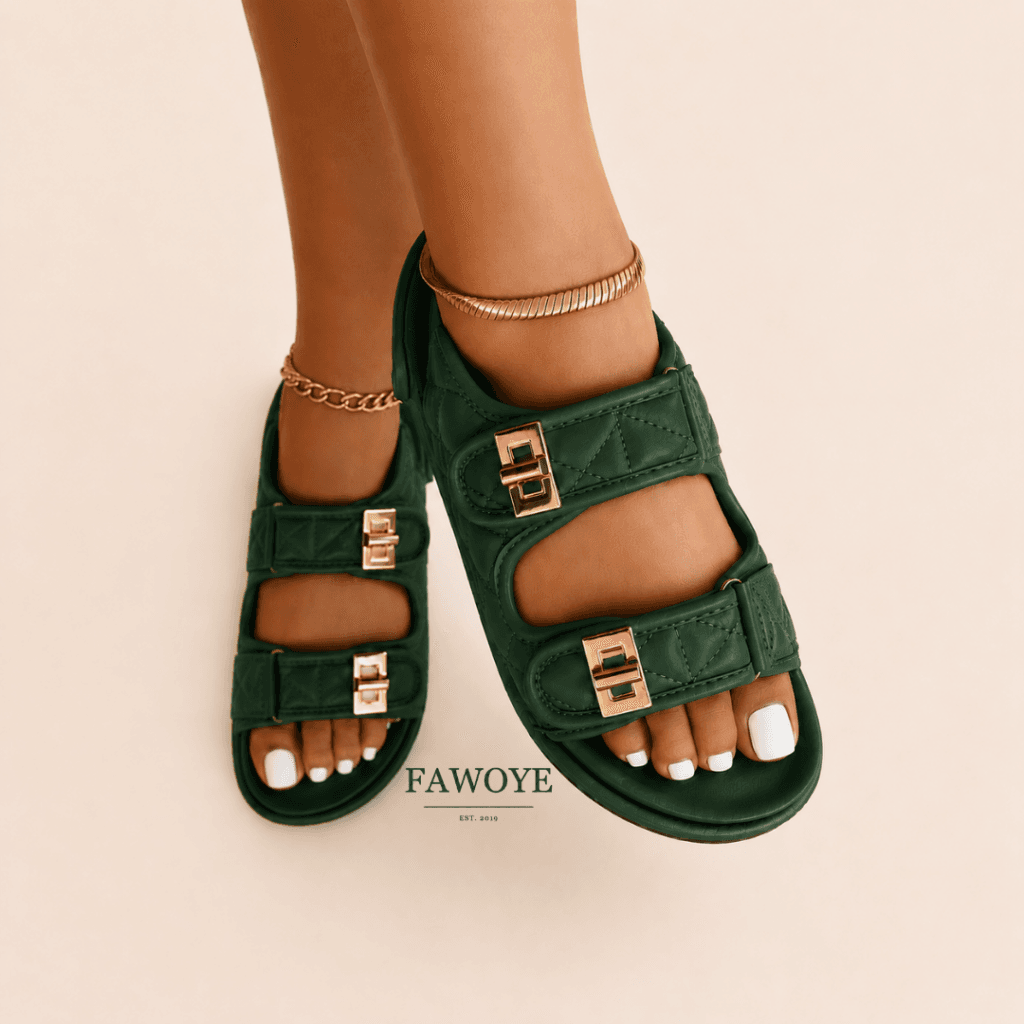
For a true flat option, consider a polished sandal such as the FAWOYE Quilted Women’s Sandal. If you want a little lift without committing to a narrow high heel, the FAWOYE Strappy Block-Heel Mule is a useful alternative rather than a flat.
The best types of flat shoes for Nigerian weddings
1. Dressy flat sandals
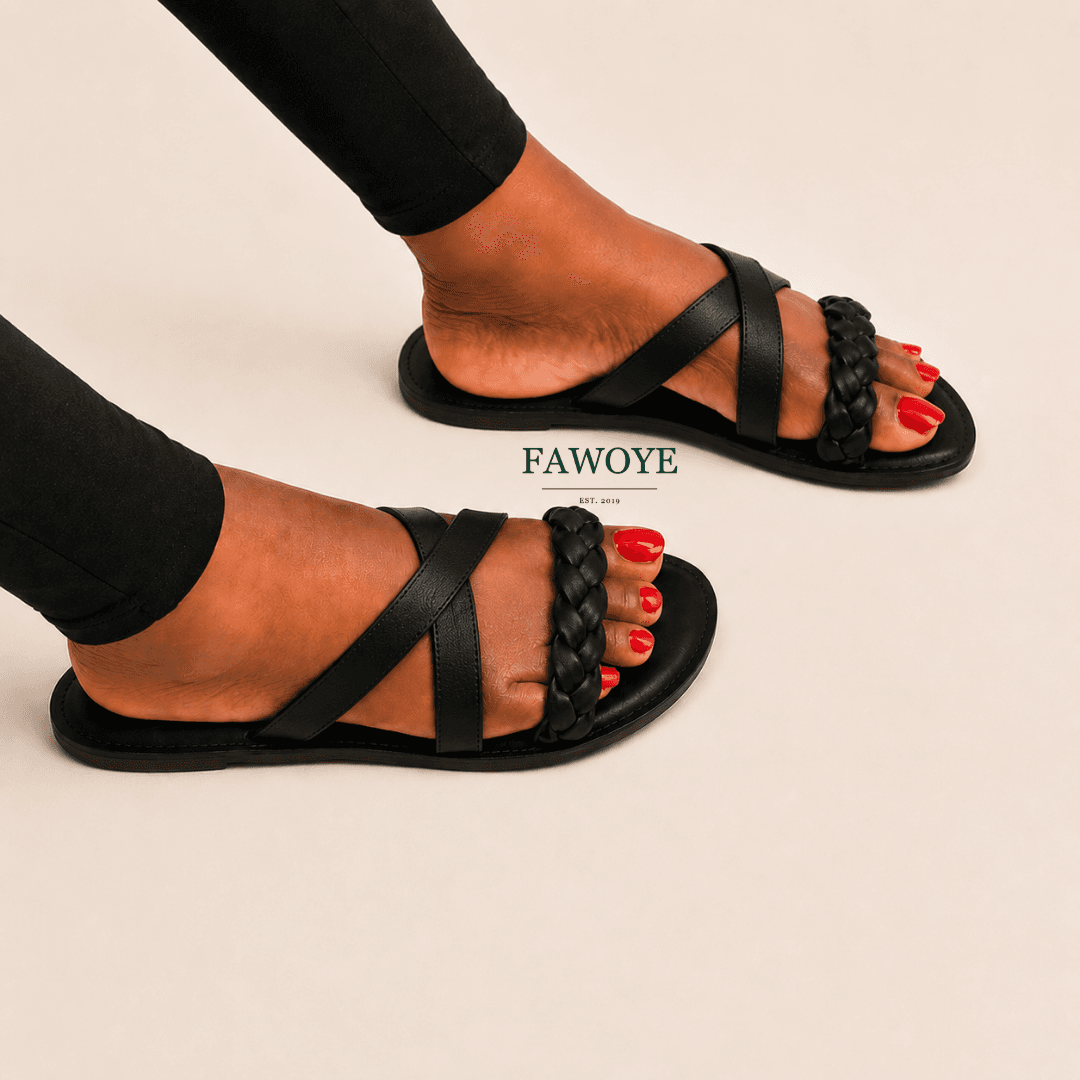
A dressy flat sandal is one of the easiest choices for a traditional wedding, civil ceremony or reception. It works especially well with ankle-length dresses, iro and buba, wrappers, jumpsuits and outfits that allow the shoe to be seen.
Choose straps that sit comfortably across the foot. Very thin straps can look delicate, but they may also press into the skin after several hours. A slightly broader or softly finished strap often distributes pressure better.
2. Slingback flats
A slingback gives the elegance of a closed or pointed front while leaving the heel lighter. It can suit church ceremonies, formal receptions and tailored guest outfits. The back strap should stay in place when you walk; if it falls constantly, the shoe will become tiring even if the sole feels soft.
3. Closed-toe flats
Closed flats are a sensible option for guests who prefer more coverage or who expect rain, damp ground or an air-conditioned hall. Almond and softly pointed toes tend to feel dressier than very round, casual shapes.
Do not buy a sharply pointed pair that crushes your toes simply because it looks elegant. The shoe should match the shape and width of your foot. Comfort begins with fit, not with padding added to a shoe that is already too small.
4. Dressy mules
A low mule is easy to slip on and can look modern with a dress, skirt or tailored trouser set. It is best when the upper holds enough of the foot to stop you gripping with your toes as you walk. For a packed dance floor, a secure sandal or slingback may be easier than a very open mule.
5. Loafer-inspired flats
A neat loafer can work with a structured suit, jumpsuit or minimalist dress, particularly for a civil wedding or a smart evening reception. Choose a slim, polished silhouette rather than a heavy office shoe. This option also works for anyone whose personal style is less delicate and more tailored.
How to choose the right flat for your outfit
Start with the outfit’s visual weight. A heavily embellished aso ebi does not always need an equally embellished shoe. Metallic, nude, black, deep brown and colours drawn from the fabric can all work, but the exact shade matters less than whether the complete look feels balanced.
For long dresses, check the hem while wearing the actual shoe. A dress altered around a high heel may drag when worn with flats. If you plan to change into flats later, take the second pair to your fitting so the hem can be considered.
For a bride, the shoe can coordinate with the dress, gele, jewellery or bouquet rather than matching every detail exactly. Traditional bridal looks also allow richer colours and textures, but the shoe should not compete with an already detailed outfit. Our guide to the best shoes for Nigerian brides covers more bridal options.
Guests can use the same principle. For more outfit-specific guidance, see best shoes for female wedding guests in Nigeria and our broader wedding guest shoe guide.
Comfort checks before you buy
Try wedding shoes later in the day when your feet may be slightly fuller. Wear them on a clean indoor surface and check the following:
- Your toes can lie naturally without curling or pressing against the front.
- The widest part of your foot sits inside the shoe rather than spilling over the sole.
- Straps feel secure but do not bite into the skin.
- Your heel does not rub or lift excessively.
- You can walk normally without gripping the shoe with your toes.
- The sole bends where your foot bends and does not twist loosely.
A shoe should not need to hurt before it becomes wearable. Materials may soften slightly with use, but painful pressure, numb toes and severe rubbing are fit warnings. Read should new shoes hurt? before relying on the idea that discomfort is normal.
Think about the venue and Nigerian weather
Wedding footwear has to work with the actual day, not only the outfit photograph. During the rainy season, outdoor entrances, gardens and car parks can be damp or muddy. A very pale fabric shoe or delicate suede flat may require more protection and care. Carry the pair in a dust bag until you arrive if the ground is wet.
During harmattan, dust shows quickly on dark polished uppers and can settle around straps. A soft cloth in your bag is useful for a quick clean before photographs. Do not apply leather cream to suede; materials require different care.
For an outdoor wedding, choose a sole with dependable contact underfoot and avoid a smooth bottom that feels slippery. For a hall wedding, consider how long you will stand during greetings, photographs and dancing. Our guide to comfortable shoes for standing all day explains why fit, support and stability matter together.
Should a bride wear flats?
Yes. A bride can wear flats for the full day or change into them after the ceremony. The better choice depends on the dress length, venue, personal style and how comfortable she feels in heels.
If you plan two pairs, they should both work with the hem. Keep the flats accessible rather than packed at the bottom of a car boot. Ask a trusted person to hold them, and change before discomfort becomes severe. Waiting until your feet are already sore reduces the benefit.
A bridal flat can still feel special through its shape, finish, colour and craftsmanship. Comfort is part of looking composed; it is difficult to enjoy photographs or greet guests naturally when every step hurts.
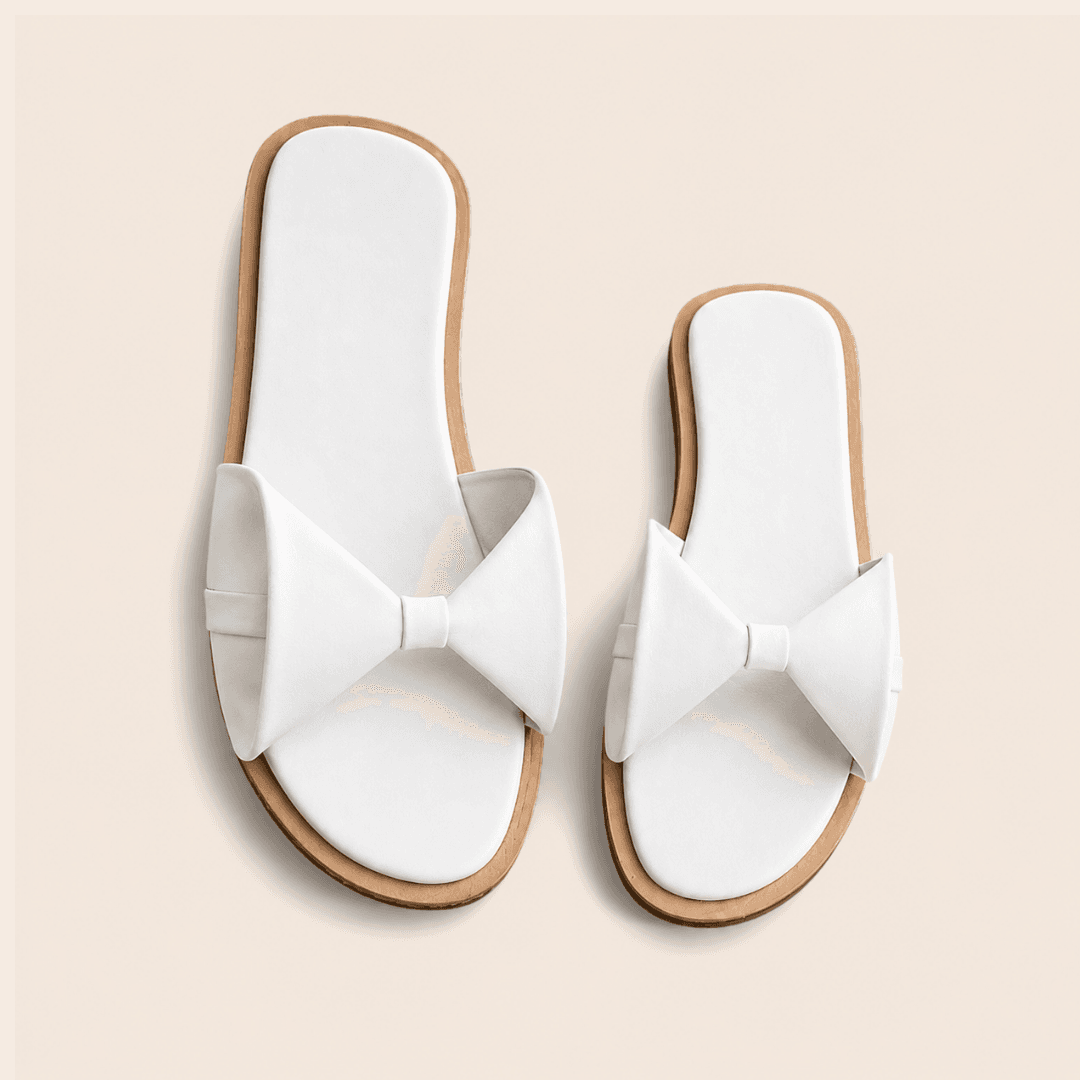
Flat shoes for wedding guests
For guests, versatility matters. A pair that works for an owambe can often be styled again with dinner outfits, church looks and other celebrations. Before buying an extremely decorative pair, consider whether a refined design in a useful colour would serve you more often.
If dancing is a priority, security matters more than a barely-there look. Choose straps or an upper that hold your foot properly. More options for long celebrations are covered in best shoes for owambe and comfortable wedding shoes in Nigeria.
A simple final checklist
The best flat wedding shoe should answer yes to four questions:
- Does it suit the outfit and level of formality?
- Does it fit the real width and shape of your foot?
- Can you walk without rubbing, slipping or gripping?
- Will the material and sole work for the venue and weather?
If it only looks good while you are standing still, it is not the right wedding shoe. Choose the pair that lets you arrive polished and remain present through the final dance.
Related FAWOYE Journal guides
- Best Shoes for Nigerian Brides
- Best Shoes for Female Wedding Guests in Nigeria
- Best Shoes for Wedding Guests in Nigeria
- Best Shoes for Owambe
- Comfortable Wedding Shoes in Nigeria
- Should New Shoes Hurt?
Frequently asked questions
Can I wear flat shoes to a formal wedding?
Yes. Choose a refined shape and finish that suit the outfit. A polished sandal, slingback or closed flat can look formal without a high heel.
What colour flats work for most Nigerian weddings?
Metallics, nude shades, black and deep brown are versatile, but a colour taken from the outfit can also work. Focus on balance rather than forcing an exact match.
Are flat sandals suitable for a bride?
Yes, especially for a traditional wedding, civil ceremony, outdoor venue or reception change. Check the dress hem with the flats before the wedding day.
How do I stop wedding flats from rubbing?
Start with the correct size and width. Test the pair indoors, inspect pressure points and use discreet shoe cushions only for minor friction—not to rescue a shoe that is too small.
Should I carry a second pair of shoes?
If your first pair has a significant heel or you expect a long reception, a comfortable second pair is sensible. Keep it nearby and change before your feet become painful.