
A baby’s naming ceremony is a joyful family occasion, but it can be surprisingly difficult to dress for. You want to look special in the photographs without arriving as though you are dressed for a wedding reception. You may be standing to greet relatives, moving between rooms, helping with the baby or staying long after the formal part has ended. Your shoes need to understand the assignment.
The best shoes for a naming ceremony in Nigeria are polished, comfortable and appropriate for the setting. Men can rarely go wrong with loafers, monk straps, refined sandals or derbies. Women can choose block heels, elegant flat sandals, secure slides or dressy flats. The exact pair depends on whether the event is at home, in a place of worship or at a formal venue, and whether you are a parent, close family member or guest.
This guide covers the practical details so your footwear completes the outfit and carries you comfortably through the day.
First, understand the kind of ceremony
Naming ceremonies across Nigeria are not all the same. Some are intimate gatherings at the family home. Some include religious rites at a church or mosque. Others move into a decorated hall or restaurant with a larger guest list. Family traditions also shape the dress code.
If the invitation does not make the setting clear, ask the host or someone close to the family. That one question can save you from wearing a formal heel to a crowded home gathering or arriving in a casual slide at a dressier venue.
At a family home
Comfort and easy movement come first. Seating may be arranged across different rooms or outside, and you may need to move around more than expected. A refined flat, secure sandal, loafer or low heel is usually more useful than a very high heel or stiff formal shoe.
Some homes and places of worship may ask guests to remove their footwear. If that is possible, choose a pair that comes off neatly without a struggle, and make sure your socks or hosiery are clean and presentable. Do not assume; follow the host’s custom.
At a church or mosque
Choose modest, polished footwear suited to the outfit and the expectations of the venue. A closed loafer, derby or elegant sandal can all work. If footwear removal may be required, a clean slip-on is convenient. Avoid noisy soles, unstable heels and pairs that distract you every time you stand.
At a hall, restaurant or formal venue
You can dress the shoes up. Men can choose smooth leather loafers, monk straps or derbies. Women can wear a block heel, refined sandal or dressy flat. Even here, comfort matters: the event may extend into photographs, food, greetings and a longer family celebration.
The best naming ceremony shoes for men
Men’s footwear should follow the outfit. Native wear usually favours slip-ons and sandals, while a suit gives more room for a structured lace-up.
1. Loafers: the most versatile choice
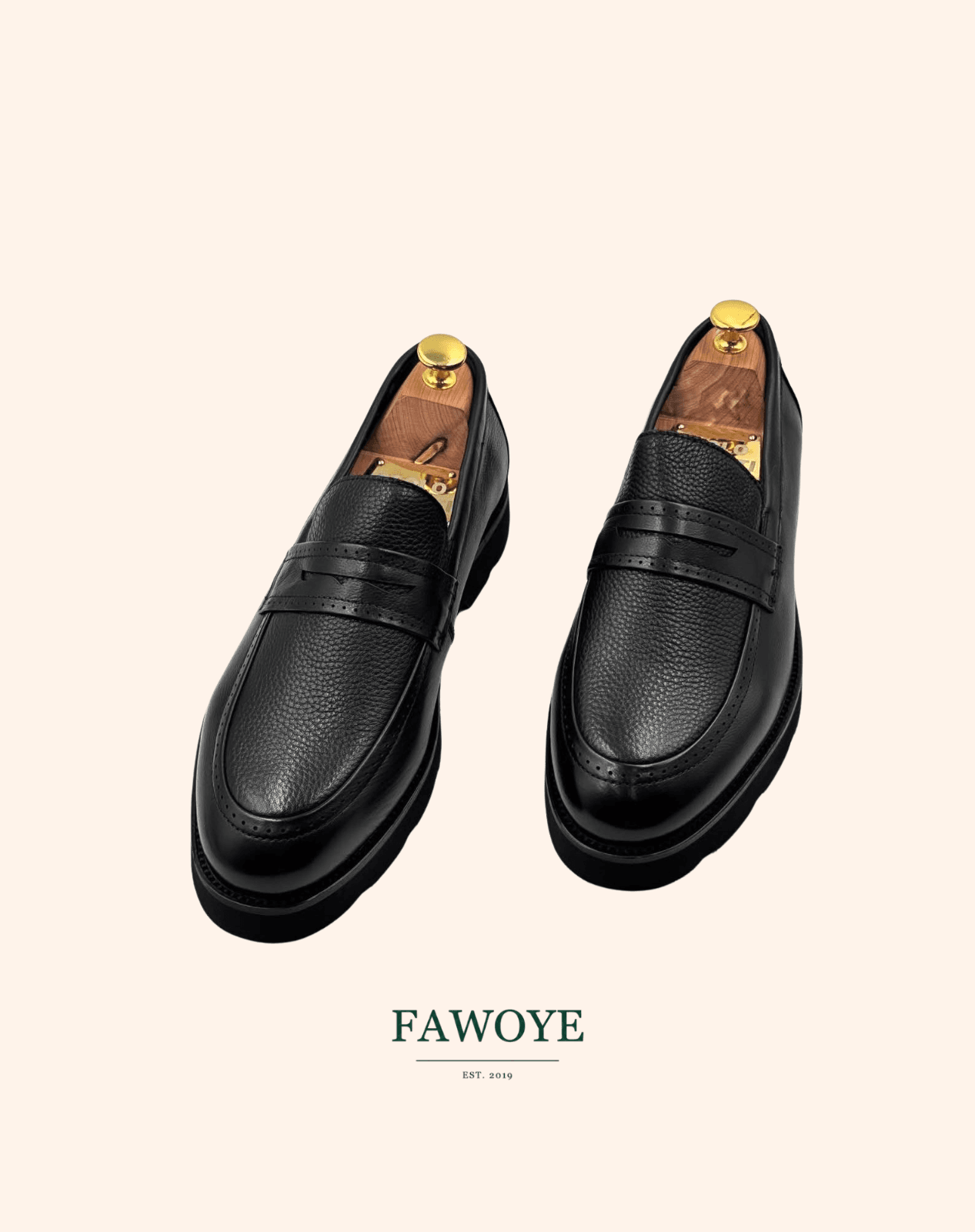
A clean loafer is the safest all-rounder for a naming ceremony. It is polished enough for photographs, easy to wear for hours and simple to remove if the setting calls for it. It works with senator, kaftan, a native two-piece, chinos and even relaxed tailoring.
The FAWOYE Penny Loafers have a smooth leather upper and a clean shape that can move between traditional and smart-casual outfits. Brown works beautifully with cream, beige, olive, navy and many warm native fabrics. Black is sharper with charcoal, black, white and deeper colours.
If you want more styling combinations, see how to style men’s loafers in Nigeria.
2. Monk straps: a formal native-wear option
A monk strap is useful when you want the presence of a dress shoe without laces. Its buckles give it more structure than a plain loafer, so it suits a parent, grandparent or close family member wearing a particularly formal senator, kaftan or agbada.
The FAWOYE Double Monk Strap is best paired with an outfit that lets the buckles be the main footwear detail. Keep other accessories controlled. A richly patterned native outfit usually needs a calm shoe; a plain outfit can carry a slightly stronger colour or texture.
Our comparison of loafers and monk straps for native wear can help if you are choosing between the two.
3. Refined leather sandals: right for relaxed ceremonies
A structured leather sandal makes sense for a naming ceremony held at home, especially with a relaxed kaftan or native two-piece. It feels appropriate for Nigerian weather and keeps the look intentional without becoming overdressed.
The key word is structured. Choose a sandal with a well-finished upper, a secure fit and a clean footbed. Avoid worn rubber slippers or anything you would normally reserve for quick errands. The FAWOYE Covered Heel-Strap Sandal is unisex and gives more hold than an open slide, which is useful if you expect a lot of movement.
4. Derby shoes: best with a suit or formal separates
If you are wearing a suit, blazer or tailored trousers, a derby gives a polished finish without feeling as strict as some formal lace-ups. The FAWOYE Derby Shoes use open lacing, a construction that opens more easily across the instep than a closed-laced Oxford.
Choose black for a darker formal outfit, or brown, tan or burgundy when you want warmth. A derby can also work with modern native wear, but a loafer or monk strap usually gives the cleaner traditional line.
The best naming ceremony shoes for women
Women often need a pair that works for the outfit, the venue and the practical reality of helping with family duties. Elegance does not require a difficult heel.
1. Low block heels: dressed up but stable
A low or mid-height block heel is a reliable choice for a hall, restaurant or church ceremony. It gives height and a formal finish with a wider, steadier base than a narrow stiletto. It works with Ankara dresses, lace, a wrapper-and-blouse set, jumpsuits and tailored dresses.
Think about the floor before choosing the height. A high heel can feel manageable on smooth indoor flooring but awkward on an uneven compound, outdoor paving or soft ground. If the ceremony moves between indoors and outdoors, a lower block heel is the sensible choice.
2. Elegant flat sandals: polished without the pressure
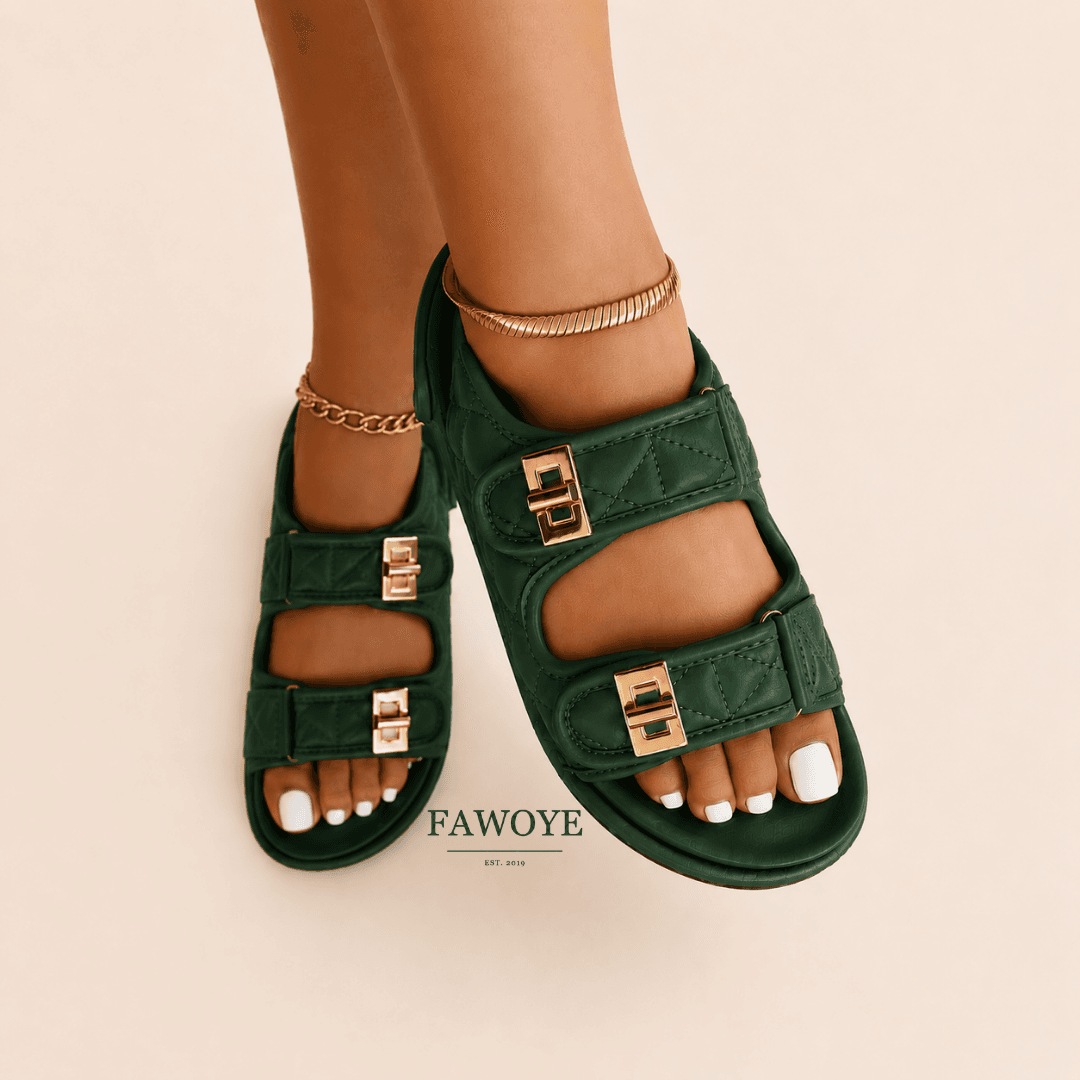
A flat sandal can look beautifully dressed when the straps, finish and shape are refined. The FAWOYE Covered Heel-Strap Sandal secures the foot with an adjustable heel strap, while the FAWOYE Quilted Women’s Sandal brings texture to a simpler outfit.
Flats are particularly useful for mothers, aunties and close friends who expect to help, carry items or move around throughout the gathering. They also make sense for an intimate home ceremony where a high heel may feel unnecessary.
See best flat shoes for weddings for more principles that also apply to long family occasions.
3. Dressy slides: good for relaxed home events
A well-made slide can work with a flowing Ankara dress, boubou, kaftan-style dress or coordinated set. It should look deliberate: clean upper, neat sole and a fit that does not force your toes to grip the shoe as you walk.
Slides are less secure when you will be carrying the baby, climbing stairs or moving quickly. In that case, choose a back strap or a covered flat. If you already have a polished slide in mind, what to wear with slides will help you balance the rest of the outfit.
What should the baby’s parents wear?
The parents are likely to be photographed more than anyone else, but they are also the people most likely to be standing, greeting, holding the baby and attending to small details.
For the father, a loafer or monk strap is an excellent balance with formal native wear. If he is wearing a suit, a derby is dependable. The shoe should be broken in, securely fitted and cleaned before the event.
For the mother, a low block heel or secure flat sandal usually offers the best balance. The right shoe depends on how she feels after delivery and what is comfortable for her body that day. There is no prize for enduring a painful heel. A beautiful flat is fully appropriate, particularly under a long dress or wrapper.
If there will be an outfit change, keep the footwear plan simple. One neutral pair that works with both looks may be more useful than changing shoes while also caring for a baby.
Match the shoe to native wear, Ankara and formal outfits
With agbada, senator or kaftan
Choose a loafer, monk strap or structured leather sandal. Agbada already has volume and presence, so the shoe should be clean rather than bulky. Read what shoes to wear with agbada for a fuller breakdown.
With Ankara or lace dresses
Let the fabric guide the shoe. If the print or lace is detailed, use a quieter neutral sandal, flat or block heel. If the outfit is a single colour, the shoe can add texture or a controlled accent. You do not need to match every colour in the fabric.
With wrappers, boubous and flowing dresses
Choose a shoe that is stable and does not catch the hem. A flat sandal or low block heel is often easiest. Check the dress length while wearing the actual shoes, not barefoot, because even a small change in height affects the hem.
With suits and tailored separates
Men can choose derbies, loafers or monk straps. Women can use a block heel, flat sandal or structured flat. Keep the footwear as polished as the tailoring; a tired or scuffed pair will weaken an otherwise strong outfit.
Colour combinations that rarely fail
Black is the most formal and works with white, black, grey, jewel tones and many high-contrast fabrics. Brown and tan bring warmth to cream, beige, green, rust, navy and earth tones. Burgundy or wine can add depth without becoming too loud.
For women, nude, tan, brown, black and soft metallic tones are easy to repeat across different occasion outfits. You can also pick one quieter colour from an Ankara print. The shoe and bag do not have to match exactly; they only need to look like part of the same story.
Comfort checks before the ceremony
A naming ceremony may start early and continue longer than planned. Test the shoes with the complete outfit before the day.
- Walk on tile and a slightly rougher surface.
- Check that the heel does not lift excessively.
- Make sure straps do not cut into the skin.
- Confirm that your toes have room and are not pushed over the sole.
- Sit and stand several times, especially if the outfit is long.
- If the shoe is new, wear it briefly indoors before the event rather than debuting it for hours.
Shoes should not have to hurt to become wearable. A material may soften slightly, but the wrong size or unsuitable shape remains a problem. Our guide on the shoe break-in myth explains the difference.
Plan for Nigerian weather and the venue floor
For a rainy-season event, consider the path from the car to the venue and whether parts of the ceremony are outdoors. A stable sole and secure fit matter. Smooth leather is generally easier to wipe after light splashes than suede, but neither should be taken through standing water. Allow damp shoes to dry naturally away from direct heat.
During Harmattan, dust can settle quickly on dark footwear. Wipe the pair before leaving and keep a soft cloth nearby for photographs. For hot daytime ceremonies, an open sandal may be more comfortable, provided it still suits the venue and dress code.
The right shoe supports the occasion quietly. It looks good in the family photographs, respects the setting and allows you to take part without thinking about sore feet.
Shop naming ceremony styles
Every pair is made to order. Check the product page for current colours and sizes before you order.
Shop the styles in this guide
Every FAWOYE pair is made to order in Ilorin and delivered anywhere in Nigeria in seven working days. Browse the wedding collection, handmade loafers and monk strap shoes, or see the full collection.
Frequently asked questions
What shoes are best for a naming ceremony in Nigeria?
For men, loafers, monk straps, structured leather sandals and derbies are dependable. For women, low block heels, elegant flat sandals and refined flats work well. Choose according to the venue, outfit and amount of standing or movement expected.
Can I wear slippers to a naming ceremony?
A polished leather slide or native sandal may suit a relaxed home ceremony. Worn rubber slippers or very casual house footwear will usually look underdressed. For a formal hall or place of worship, choose a more structured shoe.
What shoes should I wear with Ankara to a naming ceremony?
A block heel, refined flat sandal or structured flat works well. If the Ankara is busy, choose a quiet neutral or one colour already present in the print. If the outfit is simple, the shoe can carry more texture.
Are heels necessary for women at a naming ceremony?
No. An elegant flat is entirely appropriate and often more practical for a home event or for anyone helping with the baby. Polish comes from the design, finish and condition of the shoe, not heel height alone.
Can men wear lace-up shoes with native wear?
Yes, especially when the native look is modern and formal. However, loafers and monk straps usually create a cleaner line with senator, kaftan and agbada. Save a derby for a suit or when the setting calls for extra formality.
What should the baby’s mother wear on her feet?
She should choose the pair that feels supportive and comfortable for her on the day. A secure flat sandal or low block heel can look beautiful while allowing her to stand, hold the baby and move around more easily.